 Fellow Canadians: All inFlow plans are available in Canadian dollars




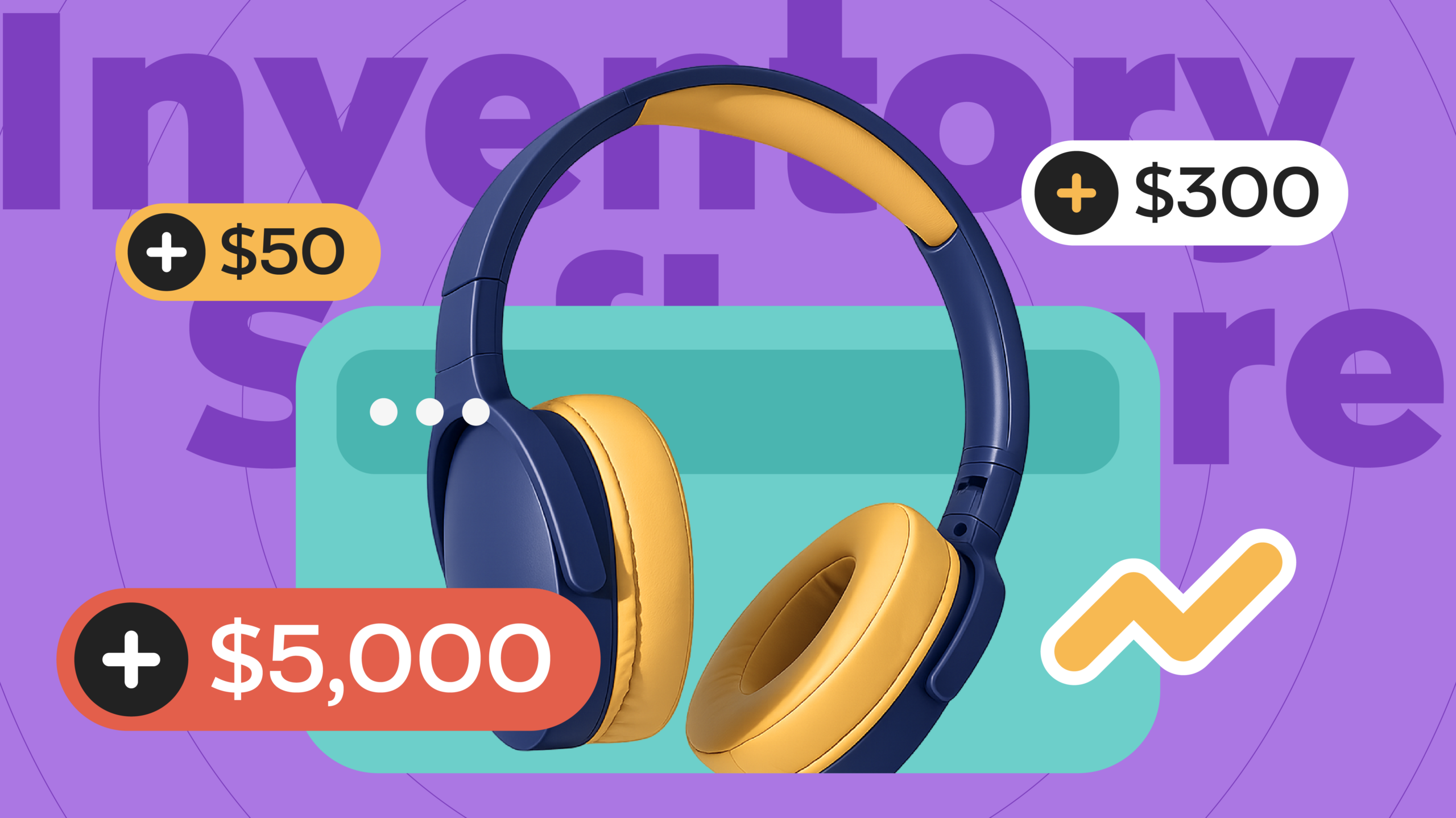
Inventory management software subscriptions cost $50 to $300 per month for most small and mid-sized businesses in 2026, with full-featured plans running roughly $150 to $1,000 per month flat-rate. Enterprise systems exceed $5,000 monthly.
First-year costs run higher, though, because they also include onboarding, warehouse hardware, and integrations, which often rival the subscription price. This guide breaks down every line item, shows a worked year-one budget, and compares current pricing across the leading platforms so you can budget accurately before you buy.
What is the average cost of inventory management software in 2026?
Inventory software is priced three ways in 2026: per-user (around $30 per seat), flat-rate tiers (roughly $100 to $1,000 per month), and enterprise quotes ($5,000+ per month). Flat-rate plans are the most predictable as you grow.
Most businesses now rely on cloud-based inventory management solutions to track stock, process orders, and manage warehouse activity. Pricing has become more flexible over the last few years, though the final inventory management software cost still depends on how many users, locations, and tools a company needs.
Which model you land on matters as much as the headline price, because each one scales differently as your team and order volume grow.
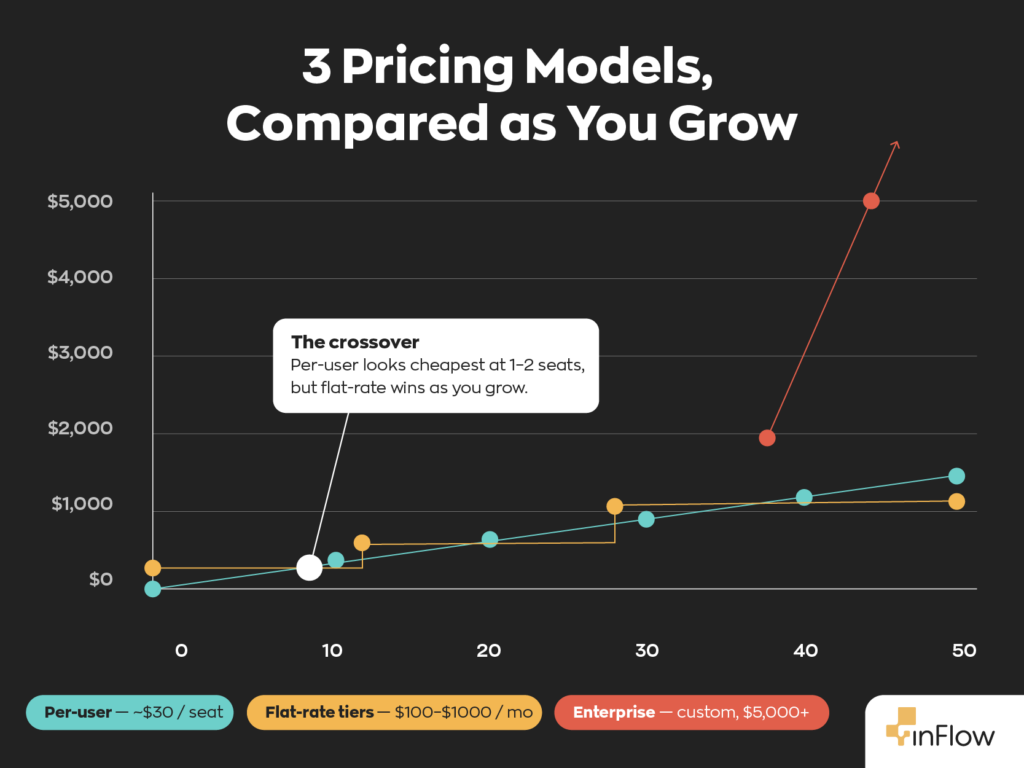
Per-user subscriptions charge for every seat, so the monthly cost climbs each time you add a warehouse, sales, or remote employee. They look cheap at one or two users but get expensive fast.
Flat-rate tiers bundle a set number of users, orders, and locations into one price. You pay the same whether the plan is half-full or full, which makes budgeting predictable and rewards growing into the tier you buy.
On-premise perpetual licenses are a large one-time purchase rather than a subscription, now mostly limited to large enterprises that need full control of their data and have the IT staff and server hardware to run it.
Cloud-based software dominates the market (now a $2.75 billion category in 2026 according to Fortune Business Insights) because it removes server costs and updates automatically. On-premise systems still exist for enterprises needing full data control, but they require internal IT teams and server hardware that push total cost well into five figures.
Inventory management software pricing comparison (2026)
The table below shows current starting prices across widely used platforms. Most vendors hide higher tiers behind quotes, so the figures reflect publicly listed entry pricing.
| Platform | Pricing model | Starting price | Free plan | Free trial |
| inFlow Inventory | Flat-rate tiers | $129/mo ($99/mo billed annually) | No | Yes (14-day) |
| Sortly | Flat-rate tiers | $49/mo | Yes | Yes |
| Zoho Inventory | Flat-rate tiers | $39/mo | Yes | Yes |
| Odoo Inventory | Per app | $38.90/mo per user ($31.10 billed annually) | Yes | Yes |
| Asset Panda | Custom quote | Quote required | No | Yes |
Prices reflect publicly listed rates as of October 2026 and are billed monthly unless noted; annual billing typically discounts 10–20%.
A note on reading this table: low entry prices often tightly cap users, orders, or locations. The cheapest plan is rarely the cheapest fit. inFlow, for example, publishes flat-rate pricing rather than per-seat pricing, which keeps costs predictable as teams grow. Its Lite plan is $129/mo, Core is $379/mo, Pro is $629/mo, and Max is $879/mo, each discounted by 20% on annual billing ($99, $299, $499, and $699).
What pricing factors affect inventory software cost?
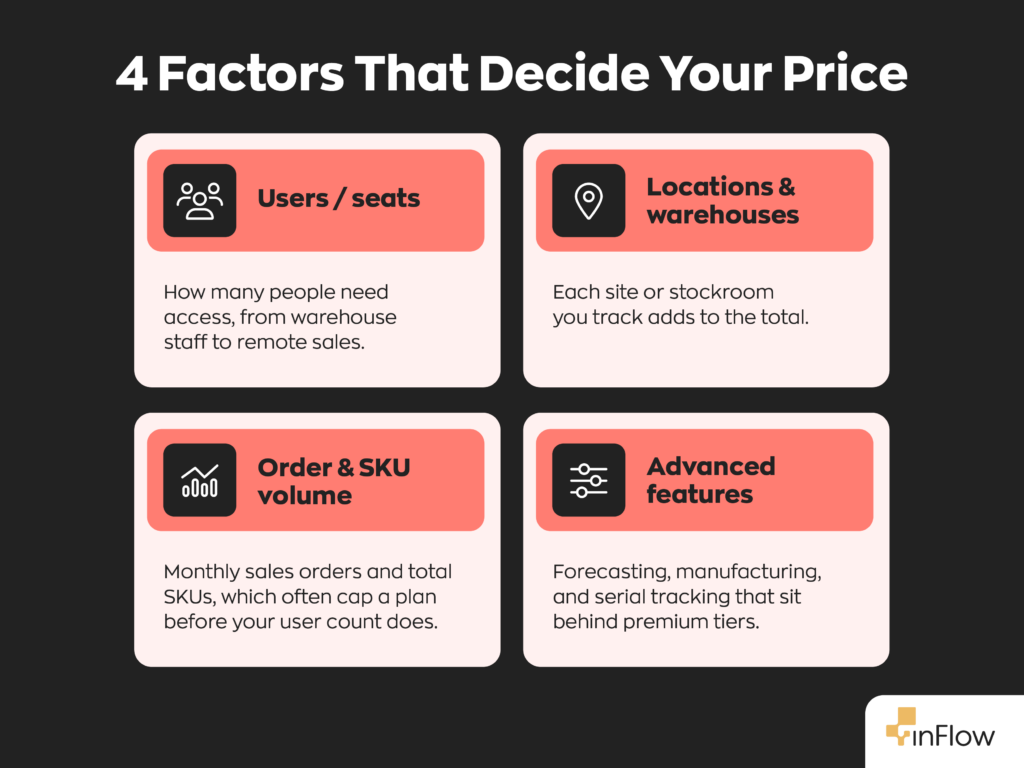
Four variables drive most price differences: the number of users, the number of locations and warehouses, monthly order and SKU volume, and which advanced features (forecasting, manufacturing, serial tracking) you need.
Business size and tier
Company size is the single biggest cost driver, mostly because it dictates how many users, locations, and orders you need. Costs rise in fairly predictable bands:
- Small businesses (1–5 users): typically $50 to $250 per month for stock counts, barcode scanning, and basic integrations.
- Mid-market teams: roughly $250 to $1,000 per month once multi-warehouse support, purchasing workflows, and advanced reporting are added.
- Enterprise: usually $5,000+ per month, almost always on a custom quote.
Feature-driven add-ons
Advanced capabilities cause the sharpest jumps within a tier. AI demand forecasting, serial-number tracking, multi-currency support, and manufacturing modules often require a premium tier or cost an extra $100 to $200 per module per month. A plan that looks affordable at signup can climb sharply once these are switched on.
Order and SKU caps
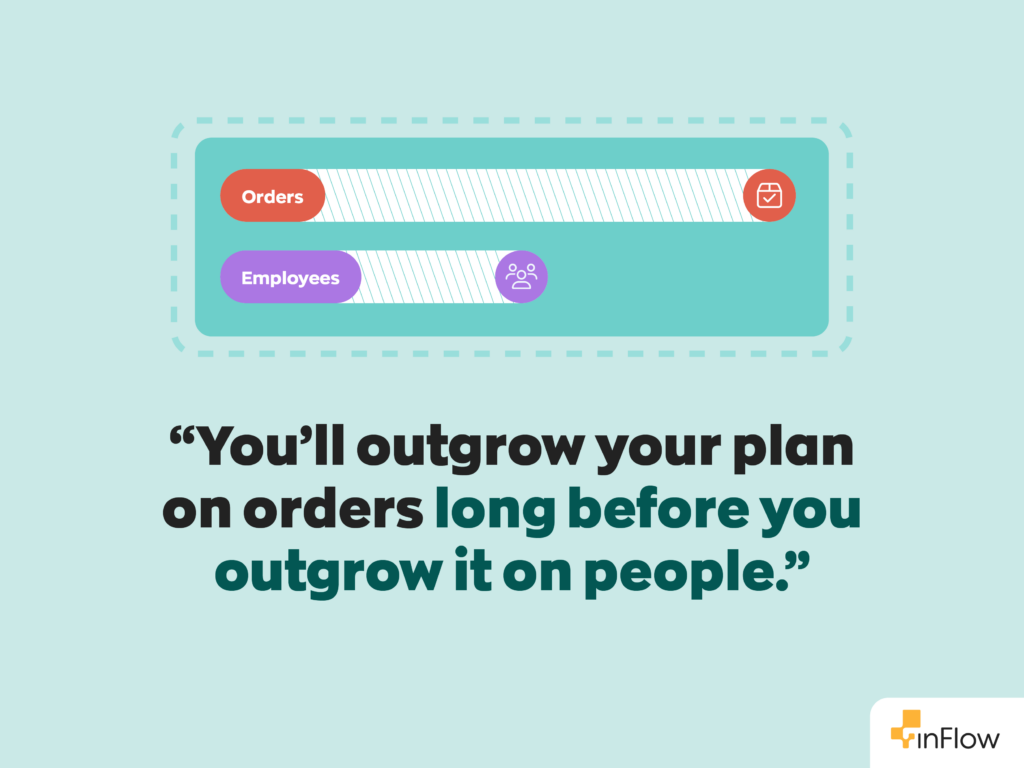
User seats aren’t the only limit. Many platforms cap monthly sales orders or total SKUs on entry tiers. Businesses that exceed a cap are pushed into the next tier sooner than their headcount alone would suggest, so forecast order volume, not just users. inFlow takes the opposite approach: every plan includes unlimited sales orders and integrations, so your tier depends on team members and locations, not order volume.
What hidden costs raise the total cost of ownership?
Beyond the subscription, expect to spend on implementation ($500–$10,000+), warehouse hardware ($1,000–$5,000), and premium integrations or support ($80–$200/mo). These often add as much as the software itself in year one.
Implementation and onboarding
Implementation is the highest one-time cost, ranging from $500 for a small setup to $40,000 for a complex migration. Two factors determine the cost: how much historical data you’re moving and whether onboarding is self-serve or vendor-led.
Small businesses with guided onboarding and account configuration typically spend $500 to $2,000. More complex moves, with years of order history and warehouse data, can cost $10,000 to $40,000.
Staff training also adds more to the cost when software includes manufacturing, purchasing, or warehouse management tools. Before comparing quotes, ask each vendor:
- Is onboarding bundled or billed separately?
- Is data migration DIY or done for you?
Those two answers can explain most of the price gap.
Hardware
Hardware can cost anywhere from $1,000 to $5,000 for most warehouses, and more if you need rugged equipment for daily use. Your price tag will depend on how many people scan at once and how demanding your environment is.
Barcode scanners, label printers, tablets, and mobile devices make up the bulk of it, though many cloud platforms let staff scan with the phones they already carry, which can cut this cost sharply.
Cold storage, heavy daily handling, or dusty environments push you toward rugged devices that cost several times more than consumer hardware. Skipping hardware planning is the most common cause of slow workflows after launch, so size the number of your devices to your peak shift, not your average one.
Integrations and support
Integrations and support are recurring add-ons that run anywhere from $0 to a few hundred dollars a month, depending on what your plan bundles. The driver is how much is included versus billed separately: some vendors fold accounting syncs like QuickBooks or Xero into the base price, while others charge monthly for premium integrations or API access.
Support works the same way. Basic help is usually included, but hands-on or priority technical support can add $80-$100 per month. Individually, these fees look minor, but they recur for the life of the contract, so a $100-a-month add-on amounts to $3,600 over three years.
Before signing, list the integrations you actually need and confirm which are bundled, because that single answer can swing your monthly cost more than the base plan does.
What does inventory software actually cost in year one? A worked example
This table shows a realistic first-year budget for a five-person business. At that size, you’ve outgrown entry plans with more users and locations, which puts you on a mid-tier flat-rate plan. These are the numbers you should actually budget against.
| Cost line | Year-one estimate |
| Subscription $299/mo flat-rate, billed annually at 20% off | ~$3,588 |
| Onboarding and data setup | $1,000 |
| Hardware (2 scanners, 1 label printer, 1 tablet) | $2,000 |
| One premium integration ($0-$100/mo) | $0–$1,200 |
| Estimated year-one total | ~$6,600–$7,800 |
Figures are illustrative estimates for a typical five-user setup; your costs vary with data volume, hardware needs, and integrations.
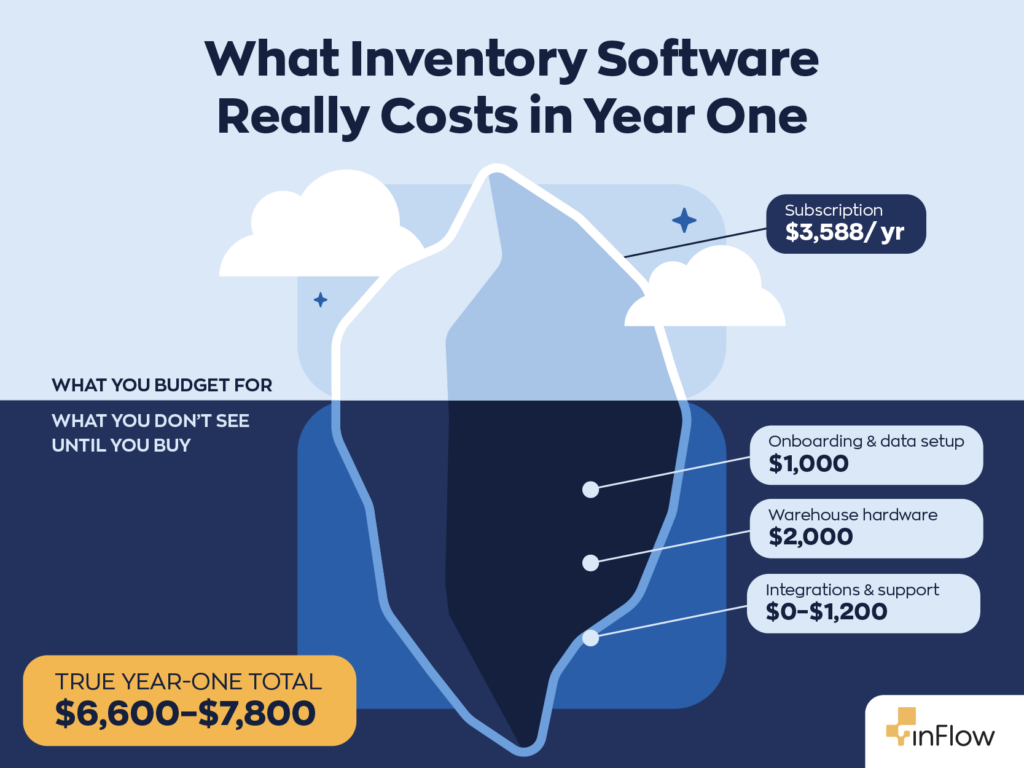
inFlow’s recommendation: budget for total cost of ownership, not the monthly sticker. A plan that costs $299/mo on annual billing lands at $3,588 a year, but realistic onboarding and hardware push the true first-year figure to roughly $6,600–$7,800 for a small team. Vendors that publish flat-rate pricing make this math far easier than per-seat plans, where costs move every time you hire.
How to choose the right plan for your budget
Choose a plan by sizing it to your users, locations, and order volume first, then comparing total cost (not sticker price) across vendors. Four steps keep the decision grounded:
- Count your real users, locations, and monthly orders first. These three numbers determine your tier more than features do.
- Add the hidden lines before comparing vendors. Put onboarding, hardware, and integrations into every quote so you compare total cost, not sticker price.
- Favor predictable pricing as you scale. Flat-rate plans avoid surprise increases each time you add staff.
- Use the free trial to test order caps and integrations. These are the two limits buyers most often hit after signing.
The bottom line on 2026 inventory software costs
Inventory management software costs most SMBs $50 to $300 per month in subscription, but the honest year-one figure, including onboarding, hardware, and integrations, typically lands roughly $6,500 to $8,000 for a typical five-person team. Company size, order volume, and feature needs drive the rest.
inFlow helps small and mid-sized businesses manage inventory without spreadsheets or costly ERP systems, with transparent flat-rate pricing built for teams from solo operators up to 50 users, combining inventory tracking, sales, shipping, and barcoding in one platform.
Ready to find the right fit for your budget? Explore inFlow’s pricing plans or start a free trial.
Reviewed by the inFlow Inventory team. Pricing verified against publicly listed vendor rates, October 2026.
FAQ
What does inventory management software cost for a small business?
Most small businesses pay $50 to $300 per month for a subscription plan. That covers stock tracking, barcode scanning, and basic integrations. The honest year-one number is higher, though, once you add onboarding, hardware, and any premium integrations, a five-person team typically spends $6,500 to $8,000 in the first year. Budget for total cost, not just the monthly fee.
What features should I look for in inventory management software?
Start with the essentials: barcode scanning, multi-location support, sales order management, and accounting integrations like QuickBooks or Xero. From there, look for demand forecasting, serial number tracking, and purchasing workflows if your operation is growing. The features that matter most are the ones that match your current order volume, not the ones that sound impressive in a demo.
Is inventory management software worth it for small businesses?
Yes! Especially once you’ve outgrown spreadsheets. The right software reduces stockouts, speeds up order processing, and gives you accurate data without manual counting. For most small teams, the time saved on reconciliation and reordering alone offsets the subscription cost within a few months. The key is choosing a plan sized to your actual order volume, not the cheapest entry tier.
What is the difference between per-user and flat-rate inventory software pricing?
Per-user pricing charges a fee for every seat, so costs climb each time you hire. Flat-rate pricing bundles users, orders, and locations into one monthly price. You pay the same whether the plan is half-full or maxed out. For growing teams, flat-rate plans are almost always more predictable and more affordable over time.
What hidden costs should I expect with inventory management software?
The four most common ones are implementation ($500–$10,000+), warehouse hardware like scanners and label printers ($1,000–$5,000), premium integrations ($0–$100/month each), and priority support ($80–$100/month). These add-ons often cost as much as the subscription itself in year one, so ask every vendor upfront what’s bundled and what’s billed separately.
How do I evaluate the total cost of ownership for inventory software?
Add up four things: the annual subscription (factoring in any multi-year discount), one-time onboarding and data migration fees, hardware for your warehouse team, and recurring integration or support costs. Then divide by 12 to get a true monthly figure. That number, not the advertised starting price, is what you’re actually committing to.
What inventory management software is best for small businesses?
The best fit depends on your order volume, number of locations, and whether you need features like manufacturing or multi-currency support. Platforms like inFlow, Zoho Inventory, and Sortly all offer SMB-friendly plans with free trials. Look for flat-rate pricing, transparent order caps, and an onboarding process that matches your team’s technical comfort level before committing.
0 Comments