




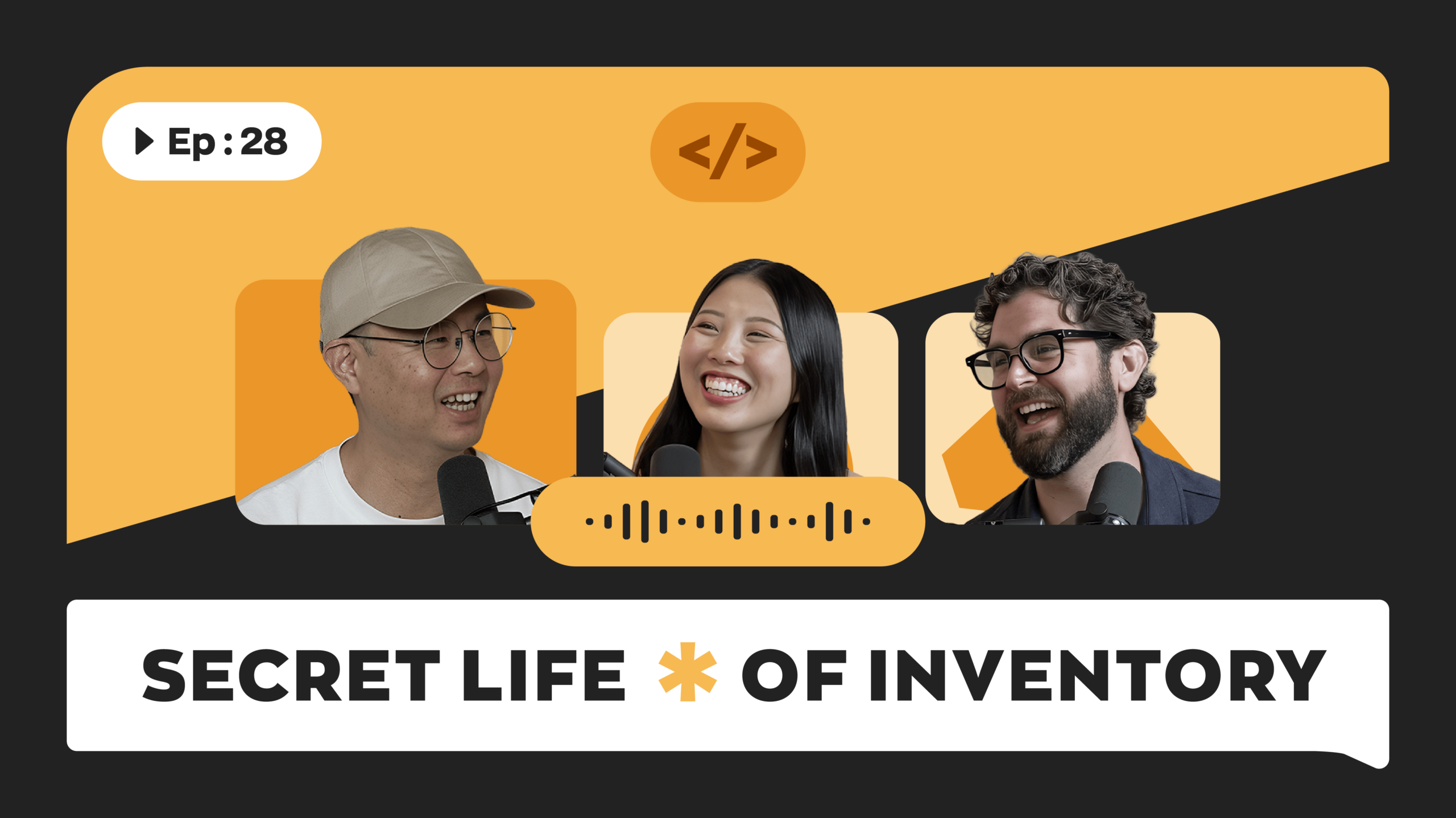
Here’s a sobering stat to start things off: about 50% of businesses close within five years, and 75% are gone within ten. So when two friends launch an inventory software company in 2007 and it’s still growing two decades later, it’s fair to ask how they pulled it off.
On this episode of Secret Life of Inventory, we sat down with Louis Leung, co-founder of Archon Systems (the team behind inFlow Inventory). What started as custom systems built for a handful of companies, has now become software trusted by over 40,000 businesses across 90 countries, with 95+ integrations and its own hardware line.
The growth isn’t actually the interesting part, though. The decisions behind it are. You can watch the full conversation with Louis below or read on for the highlights.

The advice that hasn’t changed in 20 years
If you only take one thing away from this episode, it should be this: your competitors don’t pay you, your customers pay you.
Louis and his co-founder Stephen built inFlow the slow way. They spent close to 18 months building before launching version one, and this was back when “move fast and break things” was basically gospel. They bootstrapped instead of raising money. And they kept making product decisions based on one simple question: does this actually help a small business get their work done?
“At the end of the day, we kind of just ask who are we serving,” Louis says. “If we just go back to our core principle of helping small business with their inventory and orders, we’ll be fine.”
Choosing the person you’ll build with
Before any of that, there was a friendship. Louis and Stephen met as interns in Silicon Valley, got paired up in the same company apartment, and became friends long before they became business partners. (You can read more about how it all started on our company page.)
So what’s his advice for picking a co-founder? It’s refreshingly unscientific. Find someone you actually like. Someone you’d travel with. Because you’re going to spend years with this person doing hard, unglamorous work.

“If you find a business partner based purely on skill… but there’s no relationship, you might not really respect each other,” Louis says. “Long-term wise, I’ve seen a lot of co-founders not working.”
Now, you’re probably wondering how you’re supposed to know if someone’s the right fit. Louis calls it a gut feeling (a vibe check, if you will). The practical version is to take your time. Don’t make the call after 15 minutes.
Culture without micromanagement
For a company that’s been around for 20 years, inFlow’s approach to culture is surprisingly simple: hire people who fit the way you actually work, then get out of their way.
“We don’t micromanage on a daily basis,” Louis says.
According to Louis, three things make it work:
- The right people. Folks who fit how the team actually operates.
- Real autonomy. Trust people to manage their own day.
- Clear direction. Everyone knows where the company is going and what’s launching next.
Add in the fun stuff (volunteer days, holiday parties, team lunches) and you’ve got a layer of trust holding the whole thing together.

I also like how Louis thinks about “people problems.” In his view, there aren’t good people and bad people. There are people who fit a fast-moving, collaborative tech company, and people who’d thrive in a more structured environment. Neither one is wrong. The fit is what matters. (If you want more on the people side of operations, our episode on optimizing warehouse efficiency through people, space, and software is a good companion listen.)
Two decades of waves, one North Star
Mobile. Ecommerce. Social. Crypto. Gamification. AI. Louis has watched every one of these waves roll in, and the way he handles them hasn’t changed: go back to the first principle.

“AI is an amplifier more than a replacement,” he says. At inFlow, that means using it to automate repetitive tasks and pull insights out of data that no human could reasonably read through. Our new AI Report Assistant, for example, lets customers ask questions about their inventory in plain language and get answers back.
Internally, AI adoption came from the bottom up, not as a mandate from above. Louis let the enthusiastic people experiment while the more cautious folks raised real privacy and security concerns. Think of it as a wide fence with some guiding rails, and letting things spread naturally from there. (We took a similarly grounded look at the hype in our article on vibe coding your own inventory software.)

What building something lasting actually costs
What would Louis tell his younger self? Short and sweet: you’re gonna lose some hair. Running a company is hard and stressful, and he’s not going to pretend otherwise.
His bigger point is about patience, though. We’re all wired for instant gratification these days, with Amazon Prime, overnight delivery and stories of people becoming billionaires in three months. Building something meaningful takes a lot longer than most people expect. (For a real-world example of slow, steady growth, check out our episode on going from a home business to a growing warehouse.)
So what holds up through all of it? The values you write down at the very beginning.
“Those haven’t really changed all these years,” Louis says. “Having that is kind of like the constitution of the company.”
The bottom line
inFlow’s story isn’t a growth-hacking case study. It’s a reminder that taking care of customers, hiring people you trust and staying boringly consistent about what you’re here to do can add up over 20 years. Or, as Louis puts it: if you take care of your customers, the business takes care of itself.
Want the full conversation? That includes the hardware gamble, and the decision to bootstrap. Watch the complete episode of Secret Life of Inventory.
0 Comments