 Fellow Canadians: All inFlow plans are available in Canadian dollars






Key Takeaways
- 86% of construction and trades businesses track inventory in spreadsheets, and 35% still use pen and paper, with the two often feeding into each other.
- Only about 1 in 5 operators use dedicated inventory software.
- 94% say they’re satisfied with how they currently track inventory; among the highest satisfaction of any segment we surveyed.
- Despite that satisfaction, 52% named inventory accuracy as the area most in need of improvement, and 61% made improving it their top priority for the year.
- 43% of the entire segment are, at the same time, satisfied, running with no dedicated software, and naming accuracy as their biggest gap.
- Nearly 69% saw material costs climb over the past year, and 85% now buy ahead of expected shortages and price increases.
If you work in construction or the trades, there’s a good chance your last inventory count was written on paper.
Not because anyone decided paper was the best tool for the job. It was simply there, and it worked. Someone found a flat surface, a wall or the hood of a truck, and quickly wrote down some numbers. Later, maybe that evening or maybe days later, someone entered those numbers into a spreadsheet.
That spreadsheet, more than any specialized software, is still how much of the construction industry keeps track of its inventory.
We know because we asked.
In our State of Inventory Management 2026 survey, construction and trades professionals made up the largest group of respondents: 108 businesses, representing more than a quarter of everyone we heard from. Most have been running their operations for years, and their answers paint a more nuanced picture than the usual “construction is behind on technology” narrative.
The reality isn’t that crews are resistant to change. It’s that they’ve built practical systems around the realities of the jobsite. And those systems often work, until they don’t.
Spreadsheets, pen and paper, and not much else
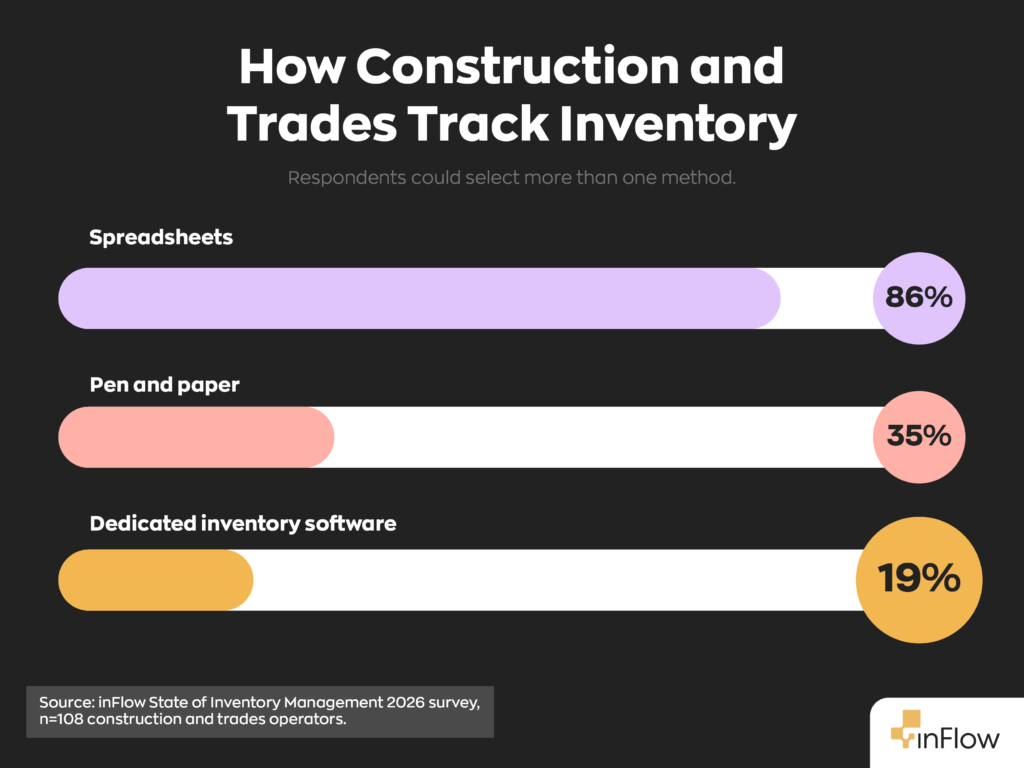
Let’s start with the tools. Among construction and trades respondents, 86% track inventory in spreadsheets and 35% still use pen and paper, and the two overlap heavily, since the clipboard on site usually feeds the spreadsheet back at the office.
What almost none of them use is dedicated software. Only about 1 in 5 reported using a purpose-built inventory system. Put it this way:
4 out of 5 construction and trades operators (81%) manage inventory with no dedicated software at all.
This isn’t a story about beginners winging it, either. Nearly 89% of these operators have four or more years of experience running operations. They’ve built working systems out of the tools they already have. The spreadsheet isn’t a placeholder they never got around to replacing; it’s the deliberate system they’ve been using successfully for years.
These businesses are of the mindset “if it ain’t broke, don’t fix it.” A fitting mantra for people working in the construction industry.
Most construction businesses are satisfied with how they track inventory
Here’s where it gets counterintuitive. You’d probably expect people running six-figure material flows on spreadsheets to be a little frustrated. They aren’t.
94% of construction and trades operators say they’re satisfied with how they currently track inventory.
That’s not a grudging “it’s fine, I guess.” It’s among the highest satisfaction of any segment we surveyed. And honestly? It makes sense. Experienced people built these systems to fit how their business actually runs. When you know your suppliers, your lead times, and roughly what’s on every truck, a well-kept spreadsheet feels less like a compromise and more like control.
So if satisfaction were the whole story, we’d stop here. It isn’t.
Paper and spreadsheets work well, until they don’t
The satisfaction is earned, at least on the surface. On the metric that hurts most day to day, running out of something while on a job site, construction and trades actually look pretty good. Just 36% report stockouts at least once a month, compared with 44% across the wider survey. That’s fewer trips back and forth to the warehouse or construction yard, and less time for crews to stand around waiting on construction materials.
But dig past the headline metric, and small leaks start to appear. More than half of these operators estimate their annual holding costs at 11% or more of inventory value, money quietly tied up in material costs sitting in a yard or a truck. And most peg shrinkage somewhere in the 1–5% range. On a single job, that’s noise. Across a year of jobs, it’s a number with a comma in it.
None of that shows up in a satisfaction score. It shows up on the P&L.
Satisfied businesses still worry about inventory accuracy
This is the tension sitting right at the center of the data. The same operators who are satisfied, experienced, and stocking out less than everyone else also identified a major weakness:
52% said inventory accuracy is the area most in need of improvement, and 61% ranked improving it as their top priority for the year.
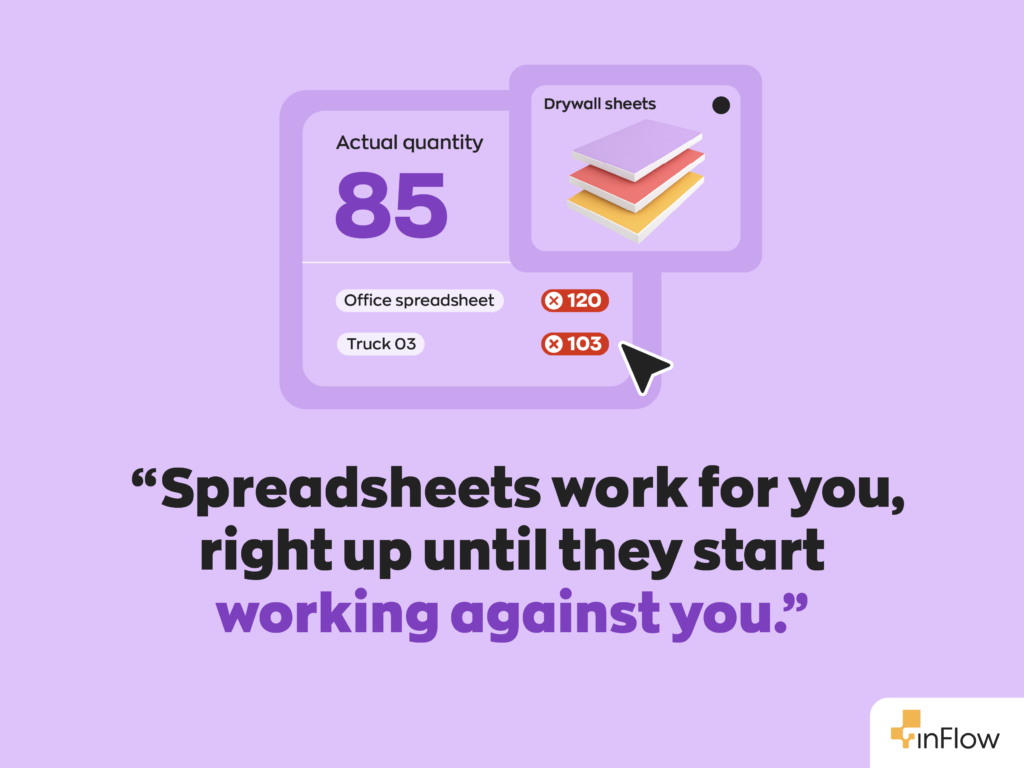
At first glance, those numbers seem contradictory. They aren’t. They’re the sign of a ceiling.
Consider this: 43% of the entire segment are simultaneously satisfied with their current system, running without dedicated inventory software, and identifying inventory accuracy as their biggest challenge. Even among satisfied operators alone, half still say accuracy is the area that needs the most improvement.
That’s because manual systems rarely fail dramatically. They simply work, until they don’t.
Paper counts get entered into spreadsheets. The spreadsheet looks correct. Everyone assumes the numbers are right. Then a crew arrives on site and discovers the material count doesn’t match reality. By then, the clock is already running.
The spreadsheet isn’t broken. It’s simply reached the limit of what a manual process can guarantee.
As construction businesses grow, paper and spreadsheets eventually reach a tipping point. More jobs, more crews, more purchase orders, and more material moving between sites all create opportunities for small errors to compound. A misplaced decimal, a missed entry, or a simple counting mistake can eventually translate into delays, emergency purchases, or even hundreds of thousands of dollars in avoidable costs.
And the pressure on that ceiling is only increasing.
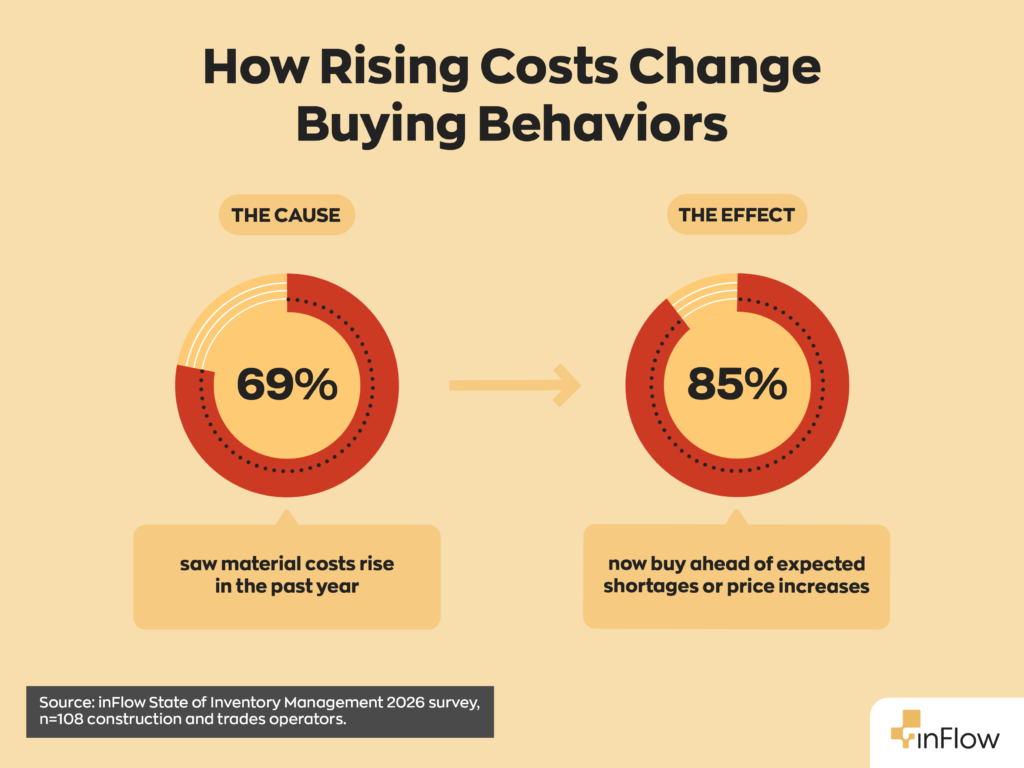
Nearly 69% of construction and trade businesses told us material costs increased over the past year, while 85% now purchase excess inventory ahead of expected shortages or price increases. The moment you’re buying inventory months in advance to lock in pricing, an accuracy gap stops being a rounding error. It becomes cash tied up in the wrong SKU, or a shortage on a job site you were certain you’d already covered.
What better construction site inventory management looks like
If you recognize your own business in the numbers above, the answer isn’t to rip out a system that’s been working for years. It’s to start future-proofing your operation before growth exposes the cracks.
That doesn’t mean changing everything overnight. It means identifying the parts of your inventory process that carry the most risk and improving them before small inaccuracies become expensive problems.
A few practical steps worth considering:
Cycle count more often
Half of this segment already runs monthly cycle counts, and it’s a habit worth keeping or starting if you’re in the half that doesn’t cycle count as often. Rolling counts of a few high-value or fast-moving items each week catch discrepancies while they’re still small. Conducting these counts often will be far less painful than one dreaded annual count that shuts everything down for a day.
Use master lists for your inventory
Most accuracy problems trace back to the same thing: material living in two places at once. For example, a truck log and an office spreadsheet that slowly drift apart. A single source of truth everyone updates beats three well-maintained ones that quietly disagree with each other.
Use the right tool to manage your inventory
People working in construction know better than anyone that you need to use the right tool for the job.
A spreadsheet is a genuinely good system at a certain scale. As jobs, locations, and purchasing increase, the question isn’t whether it works, it’s whether it can still guarantee accuracy when the count moves faster than one person can maintain by hand.
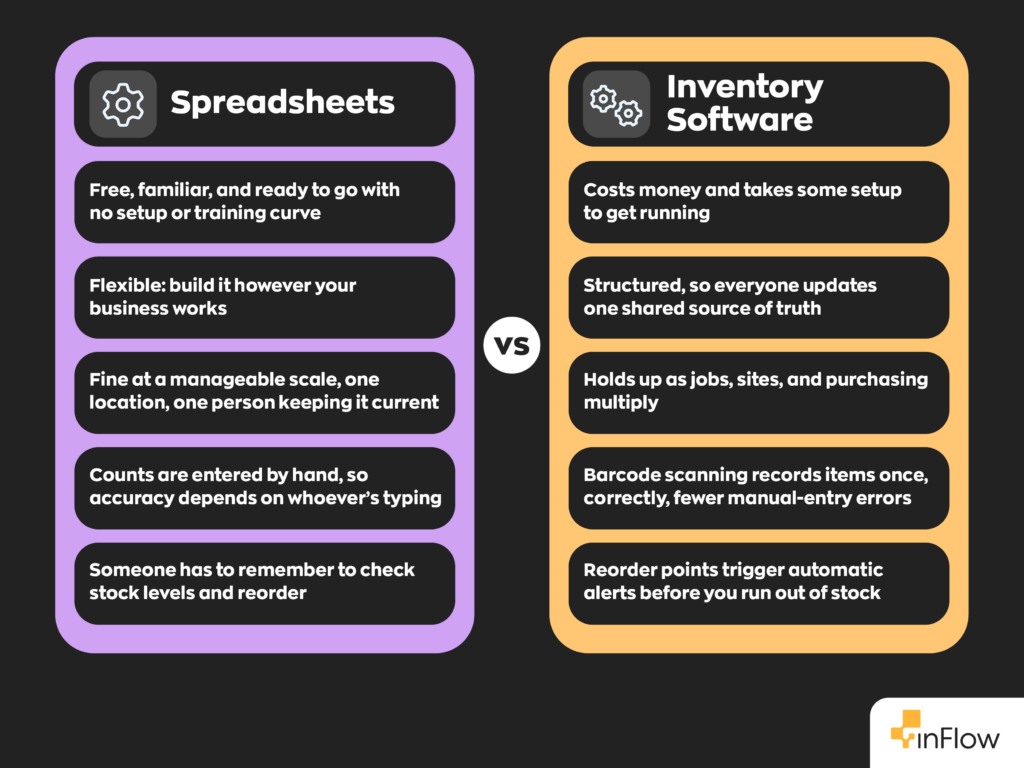
That’s the point at which construction inventory management software starts earning its keep, largely through two things a spreadsheet can’t do. The first is reorder points, which trigger an automatic alert when an item drops below a set minimum. The second is barcode scanning, which removes the manual paper-to-spreadsheet data entry where most accuracy errors creep in. We built inFlow so accurate counts and timely reorders are the automatic byproduct of everyday work, not another task to remember at the end of a long day.
Final thoughts
The operators in this survey aren’t behind. Their process works good enough that manual systems have carried them further than most industries manage. The real question the data raises is less obvious: your system got you here, but can it keep up as your business grows? For most, the honest answer is probably not.
Based on inFlow’s State of Inventory Management 2026 survey. Figures reflect the 108 construction and trades operators surveyed. Media and industry publications are welcome to cite these findings with attribution to inFlow Inventory.
FAQ
What’s the most common way construction businesses track site inventory?
Spreadsheets, hands down. 86% of construction and trades operators use spreadsheets to track inventory, and 35% still use pen and paper on top of that, usually feeding the paper counts into the spreadsheet back at the office. Only about 1 in 5 use any kind of dedicated inventory software.
Why is inventory accuracy such a common problem in construction, even for experienced operators?
Because a manual system doesn’t fail loudly; it fails quietly. Nearly 89% of construction and trades operators surveyed have four or more years of experience, and their spreadsheets genuinely work most of the time. The trouble is that manual processes have a ceiling on how accurate they can stay, especially as purchasing and job volume increase. That’s why 52% still name accuracy as their top area for improvement, even while 94% say they’re satisfied overall.
What tools or software are most useful for managing construction site inventory?
A spreadsheet is often all a small operation needs. But once inventory is moving between multiple job sites, vehicles, and storage locations, manual tracking becomes increasingly difficult to manage. Dedicated construction inventory management software helps bridge that gap with real-time inventory visibility, barcode scanning to reduce data entry errors, and automated reorder alerts that keep materials flowing to the right place at the right time.
How often should construction businesses count their inventory?
Half of the construction and trades operators we surveyed already run monthly cycle counts, and it’s a solid baseline. Better still is conducting rolling counts on a handful of high-value or fast-moving items every week. Catching a discrepancy while it’s small is a lot less painful than discovering it during one big annual count.
How much does poor inventory accuracy actually cost a construction business?
It’s rarely one big loss; more often it will show up as a slow leak. More than half of construction and trades operators estimate annual holding costs at 11% or more of inventory value, and most report shrinkage somewhere in the 1–5% range. On a single job, that’s a rounding error. Across a year of jobs, it adds up to a real number on the P&L.
Is a spreadsheet enough for managing construction site inventory, or do I need software?
It depends on scale. A spreadsheet is a genuinely capable system for a smaller operation with a manageable number of jobs and locations. But as material costs rise (69% of operators saw costs climb this past year) and more businesses buy ahead to beat shortages (85% now do this), the accuracy demands on your system go up too. That’s usually the tipping point where dedicated software starts paying for itself.
0 Comments