




Key takeaways
- VAT in the Digital Age (ViDA) is a new initiative by the EU to modernize the VAT system for the digital economy.
- ViDA will include real-time digital reporting and e-invoicing, requiring businesses to report transactions within two days and use a standardized electronic invoice format (EN 16931).
- Single VAT Registration (SVR) will simplify compliance for cross-border sales by allowing businesses to use a single VAT ID to fulfill VAT obligations in multiple EU countries.
- Sales platforms will take on more responsibility under ViDA, collecting and submitting VAT on behalf of sellers in some cases.
- SMBs should automate invoicing and tax reporting, and choose integrated software systems like inFlow and QuickBooks/Xero.
The digital economy continues to grow exponentially day after day, and governments are under increasing pressure to keep up. In the European Union (EU), the rise of cross-border ecommerce and digital services has outpaced the decades-old Value-Added Tax (VAT) framework. To solve this growing issue, the EU has introduced VAT in the Digital Age (ViDA). This comprehensive proposal is set to transform the way VAT is reported and collected across the EU.
But what does this sweeping regulation change mean for small to medium-sized businesses, and how can they adapt in order to remain compliant? Today, we’ll answer these questions and a whole lot more!
What is VAT in the Digital Age (ViDA)?
We’ve written about Value-Added Tax (VAT) before, so we won’t go into too much detail here. Essentially, VATs are a consumer tax applied at every stage of the supply chain where value is added. Think of it as a sales tax. The VAT system that we know today was introduced in 1967, long before the birth of the digital economy.
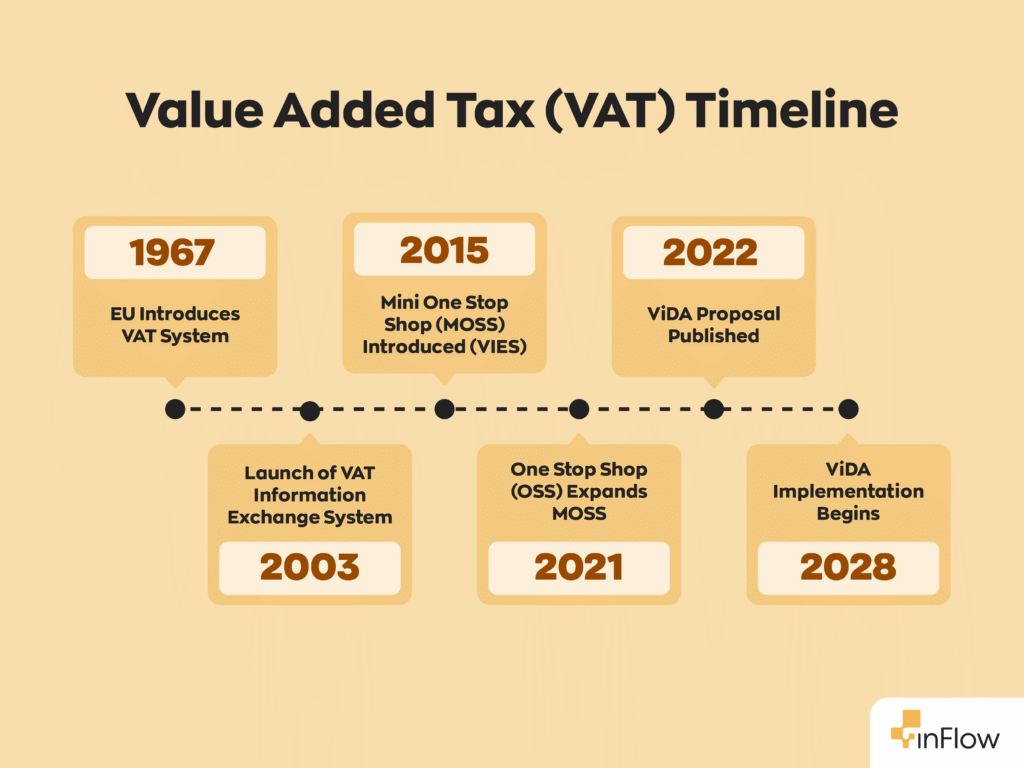
In an effort to modernize the VAT system, the European Commission has initiated a legislative project known as VAT in the Digital Age (ViDA). The idea is to address the challenges introduced by the digital economy to the VAT system. Proposed in December 2022, ViDA is expected to be implemented in stages starting from 2028, and includes reforms in:
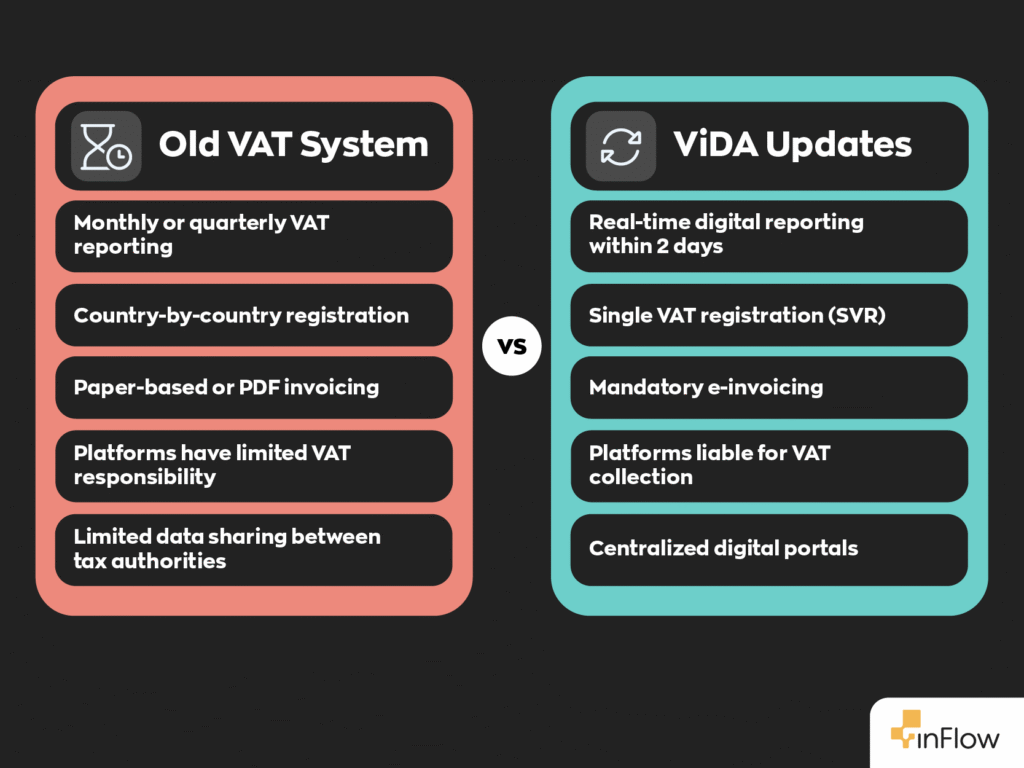
- Real-time digital reporting
- Mandatory e-invoicing
- The platform economy
- A unified VAT registration system
It’s not an overhaul or a complete change, but it does build off what already exists. If ViDA functions as intended, it will enhance VAT collection accuracy and efficiency, reduce fraud, and level the playing field for businesses operating both online and offline.
Why is the EU making these changes?
As mentioned above, the VAT system we use today was introduced in the 1960s, long before the advent of digital platforms and online marketplaces. Back then, the idea of an instant cross-border sale was science fiction; now it’s the norm.
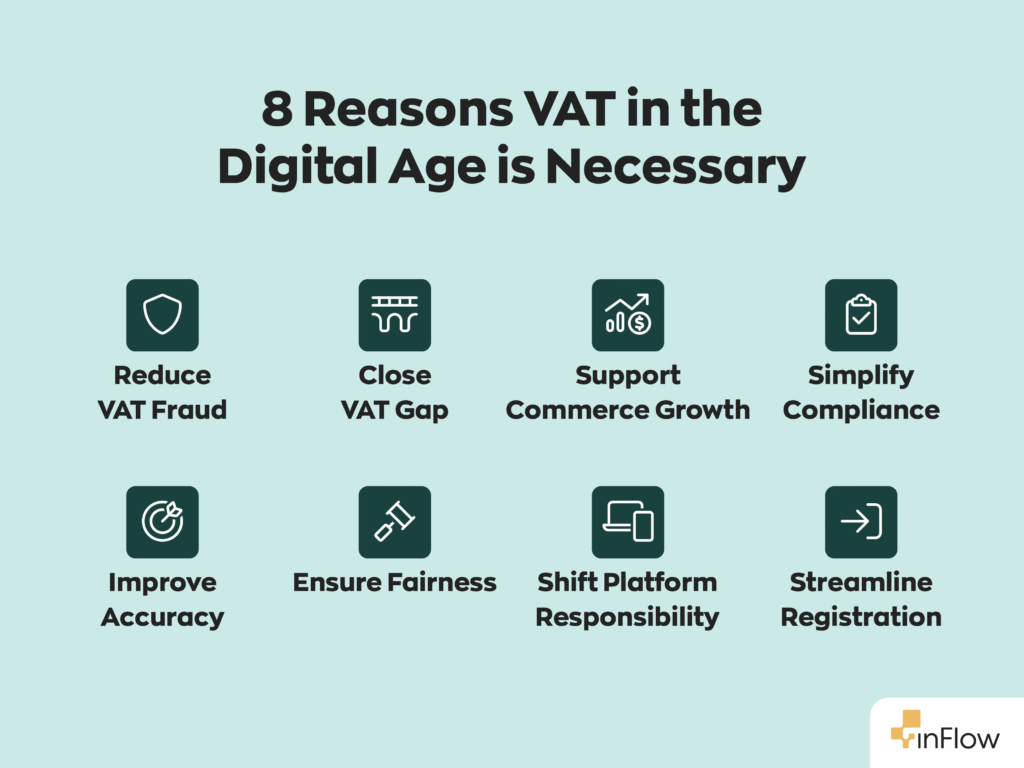
According to the EU Commission, the current VAT gap (the difference between expected VAT and collected VAT) is over €93 billion annually. That’s a lot of lost tax revenue, so it goes without saying that the EU wants to close this gap as much as possible.
Here are some of the major reasons for the introduction of ViDA:
- Combat VAT fraud through real-time reporting
- Simplify VAT compliance for cross-border sellers
- Support ecommerce growth with modern tax frameworks
- Improve tax transparency and data accuracy
Key changes introduced by VAT in the Digital Age
Several changes are being introduced with VAT in the Digital Age. Let’s break down each one and what it means for your business.
1. Real-time digital reporting & e-invoicing
The biggest change ViDA introduces is real-time digital reporting & e-invoicing. One aspect we haven’t yet addressed is the complexities surrounding VAT.
VAT involves collecting taxes at every stage of the supply chain. This creates numerous new transactions, making bookkeeping more complex. The sheer volume of data is really what allows fraud to slip through the cracks.
ViDA mandates the digital reporting of transactions within two days of issuance, and e-invoicing will become the standard format, aligned with the EU-wide EN 16931 standard. These changes are designed to combat fraud and enhance transparency.
2. Single VAT registration (SVR)
VAT rates tend to vary from country to country. For example, Spain has a VAT of 21%, while Canada has a VAT of 5%. That’s a pretty big difference. This can make things difficult for businesses operating across borders. Not only do they have to track sales in multiple countries, but they also have to keep track of VAT. Which can already be difficult on its own.
Single VAT registration proposes an online portal that allows businesses to fulfill VAT obligations for multiple countries with one VAT ID. Something like the One Stop Shop (OSS) VAT. OSS is primarily designed for foreign ecommerce shops.
3. Updated platform economy rules
A big part of ecommerce is extending your reach. A good way to extend that reach is by joining new sales platforms. Shopify, Amazon, and Etsy are all examples of sales platforms.
Under EU VIDA, sales platforms will become responsible for collecting and submitting VAT when their users do not.
Something to note is that this change greatly benefits SMBs, especially foreign ones. It moves the burden of VAT to the sales platform. This can be especially helpful when operating in multiple EU countries with VAT.
How to be compliant with VAT in the Digital Age?
Regulations are always changing. Even if there’s nothing new, there’s often changes to existing legislation. It’s easy to get caught unaware. Here are some tips to stay compliant with VAT in the Digital Age.
- Do your due diligence: Ultimately, as a business owner, it’s your responsibility to stay informed about the relevant regulations. Each ViDA component will have staggered implementation dates. Be sure to stay on top of things by subscribing to EU Commission updates. You might even consider working with a VAT consultant.
- Automate with software: Unless you’re one of the rare few who develop everything in-house, chances are you use some third-party software. And that’s great! These systems were designed to automate a wide range of tasks, including real-time tracking, tax calculations, and digital invoicing.
- Leverage integrations: When choosing software, opt for systems that work well together. For example, pairing inFlow Inventory with VAT-compliant accounting tools like Xero and QuickBooks Online can help streamline invoice generation, track taxable transactions, and prepare reports aligned with EU standards.
- Review platform agreements: If you sell through any online marketplace, ensure you’re aware of any new responsibilities, whether they’re on your end or theirs. And don’t assume what’s true for one platform will be true for another.
Common ViDA compliance mistakes and how to avoid them
As we mentioned, VAT can be complex. That’s the reason behind VAT in the digital age, to begin with. However, the majority of issues arising from VAT don’t stem from bad intentions, but rather from outdated, manual processes and misunderstandings.
Failing to register
One of the most common issues is failing to register for VAT in the correct country. Currently, this process is both expensive and complicated; however, with the introduction of the Single VAT Registration (SVR) system, it has become streamlined. So take advantage of it when it becomes available.
Manual data entry
Another frequent mistake is outdated processes that rely on manual data entry for invoicing and reporting. Automating your VAT processes by leveraging software can significantly reduce these risks.
Misclassifying goods
Similarly, misclassifying goods and applying the wrong VAT rates can lead to overpayments, underpayments, and potential audits. Using inventory and accounting tools that apply the correct tax rates by country and product type can prevent this.
Missed reporting deadlines
The primary objective of VAT in the digital age is increased compliance, making missed reporting deadlines a significant issue. With ViDA, things will be moving toward real-time digital reporting, so sticking to outdated monthly or quarterly filing methods could result in penalties. SMBs should ensure their systems are equipped to handle the increased frequency of reporting requirements.
Misunderstanding responsibilities
Businesses that sell through online marketplaces often assume the new process under ViDA means that platforms are fully responsible for all VAT obligations. While it’s true some platforms do collect and remit VAT for B2C transactions, they may not cover B2B sales or specific product categories. Always double-check with each platform so you understand who is responsible for what.
Final Thoughts
The VAT in the Digital Age initiative represents a major shift in how businesses will handle VAT across the EU. For SMBs, this presents both challenges and opportunities. Embracing automation, aligning systems, and staying informed can ensure your business remains compliant and even gains a competitive edge in the digital-first economy.
FAQ
When does ViDA become mandatory for businesses?
ViDA will be implemented in stages starting from 2028, with each phase introducing new components. The rollout will start with real-time digital reporting and e-invoicing requirements, followed by the Single VAT Registration system and updated platform economy rules.
How does Single VAT Registration (SVR) work under ViDA?
Single VAT Registration allows businesses to fulfill VAT obligations across multiple EU countries using a single VAT ID via an online portal. Similar to the current One Stop Shop (OSS) system, but expanded, SVR eliminates the need for separate VAT registrations.
What are the real-time reporting requirements under ViDA?
ViDA mandates that businesses report VAT transactions digitally within two days of issuance. All invoices must use the standardized EU-wide EN 16931 e-invoicing format. This real-time approach replaces traditional monthly or quarterly VAT filing and requires businesses to ensure their systems can support immediate transaction reporting and digital invoice generation.
Do online marketplaces handle VAT under ViDA?
Under ViDA, sales platforms become responsible for collecting and submitting VAT when their sellers don’t comply. However, this doesn’t cover all scenarios. Platforms may not handle B2B sales or specific product categories. Businesses must verify with each marketplace to understand who’s responsible for VAT collection and remittance in their specific situation.
What software do I need to comply with ViDA?
To comply with ViDA, businesses need integrated systems that handle real-time reporting, automated tax calculations, and EN 16931-compliant e-invoicing. Pairing inventory management software like inFlow with VAT-compliant accounting tools such as Xero or QuickBooks Online can streamline invoice generation, track taxable transactions, and prepare reports aligned with EU standards.

0 Comments