 Fellow Canadians: All inFlow plans are available in Canadian dollars




Key takeaways
- Private label products are made by a manufacturer but sold exclusively under your brand, offering more control and higher margins than white label or resale models.
- The main difference between private and white label lies in exclusivity and customization.
- Benefits include higher profit margins, full brand control, and stronger customer loyalty.
- Challenges include longer lead times, higher upfront costs, and greater responsibility for quality control.
- Success in private labeling starts with identifying high-demand, brand-aligned products, carefully vetting manufacturers, and negotiating clear production and payment terms.
Today’s ecommerce market is crowded, with countless sellers offering the same products dressed up in different brand packaging. When the only real difference comes down to price, it sparks an endless race to the bottom, where everyone competes to operate on the thinnest profit margins. If your business is feeling stuck in that race, you’re not alone.
While selling white label products has its advantages, it can make it harder for your business to stand out. However, not every business has the resources necessary to create custom products from scratch. But there is a middle ground that’s both accessible and profitable: private labeling.
Today, we’ll walk through everything you need to know about private labeling, from the basics to launching your first product line.
What are private label products?
Private label products are goods that a third-party manufacturer produces exclusively for your business to sell under your brand. You’re not building the product from scratch, but you have a say in what goes into it, and once it’s made, no one else can sell it.
Here’s how it works. Say a manufacturer produces candles. Instead of selling the same candle to dozens of retailers, it works with you to create one just for your brand. You choose the scent blend, the wax, the wick and the vessel. Then you add your own packaging and logo, and the manufacturer agrees not to sell that version to anyone else. The result is a product your customers can only get from you.
The beauty of this approach? You get a unique product without the huge investment of building your own production facility or developing everything from scratch.
Now you’re probably thinking: “Wait, these sound a lot like white label products. Didn’t you say those were the problem?” They do have a lot in common, so let’s talk about how private label and white label products differ.
We also made a quick video on white labeling vs private labeling so be sure to check it out below:

Private label vs. white label: what’s the difference?
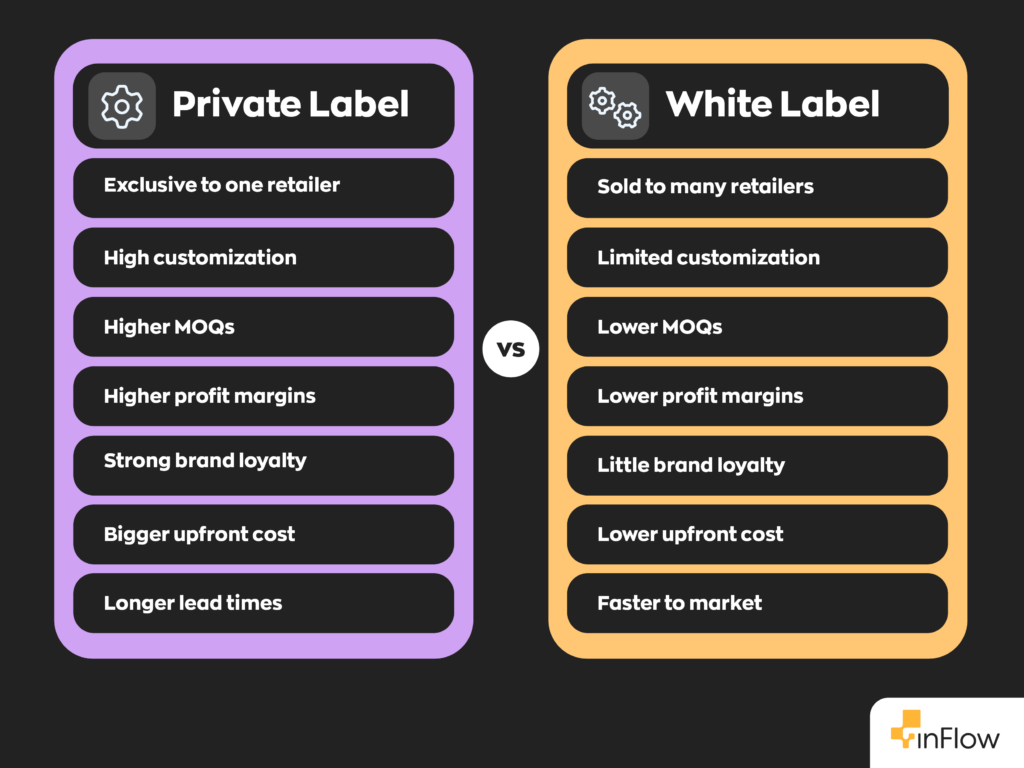
White label products and private label products have a lot in common, but some key distinctions set them apart:
Private label products:
- Made exclusively for one retailer (that’s you!)
- You control specs, ingredients, and features
- More customization options available
- Usually requires larger minimum orders
- Builds real brand equity
White label products:
- Generic products sold to multiple retailers
- Limited customization options
- Lower minimum orders
- Faster to market
- Less brand differentiation
The difference all comes down to control. With private label products, you control not just some of the product specs and features, but also the product itself. It becomes exclusive to your company, giving you something unique that no other seller offers.
Real-world private label examples
Amazon Basics
Amazon uses its massive customer data to spot high-demand products, then creates private label alternatives at competitive prices. After all, having all of that data to work with makes setting the proper margin or markup much simpler.
Kirkland Signature
Costco’s private label brand, Kirkland, accounted for about $86 billion of Costco’s roughly $254 billion in revenue in fiscal 2024. They partner with premium manufacturers to create high-quality products at lower prices. Kirkland has actually become so popular in its own right that many customers shop at Costco specifically for Kirkland products.
Trader Joe’s
Nearly 80% of Trader Joe’s products are private label. They create unique formulations you literally can’t find anywhere else, building incredible customer loyalty.
The benefits of private labeling
Private label products come at a premium price compared to selling someone else’s branded products (or even white label products), but they offer some pretty compelling benefits.
- Higher profit margins: When you’re selling branded products, you’re paying for someone else’s marketing budget and profit margins. With private labeling, you can achieve margins of 40-60% or higher, compared to 10-20% for reselling branded products.
- Complete brand control: You control everything from packaging design, product positioning, pricing strategy, and marketing. This lets you build a cohesive brand experience that resonates with your customers.
- Customer loyalty that sticks: When customers love your private label products, they can only get them from you. This exclusivity builds loyalty and reduces price-based competition.
- Better inventory control: You get better visibility into your supply chain and can work directly with manufacturers to manage inventory levels, lead times, and production schedules.
The challenges of private labeling
Private labeling is great, don’t get me wrong, but with anything, there are some caveats to consider.
- Longer lead times: Private label products typically take 2-6 months from samples to final production. This requires careful inventory planning to avoid stockouts. The good news is that once you get the hang of it, this becomes manageable.
- Higher upfront investment: You’ll need a budget for product samples, minimum order quantities, custom packaging, quality testing, and marketing costs. These costs can add up quickly and can put a strain on smaller businesses.
- Quality control responsibility: You become responsible for quality and safety standards, handling customer complaints, and managing any product issues. You might hear this and scoff, but most successful sellers find that controlling quality actually improves customer relationships. Again, private labels are all about more control for your business.
How to get started with private labeling
Private labeling starts by analyzing your existing customer base and sales data. What products are customers buying most frequently? What gaps exist in your current lineup?
Look for products that have:
- Consistent year-round demand
- Room for improvement over existing options
- Reasonable manufacturing costs
- Alignment with your brand
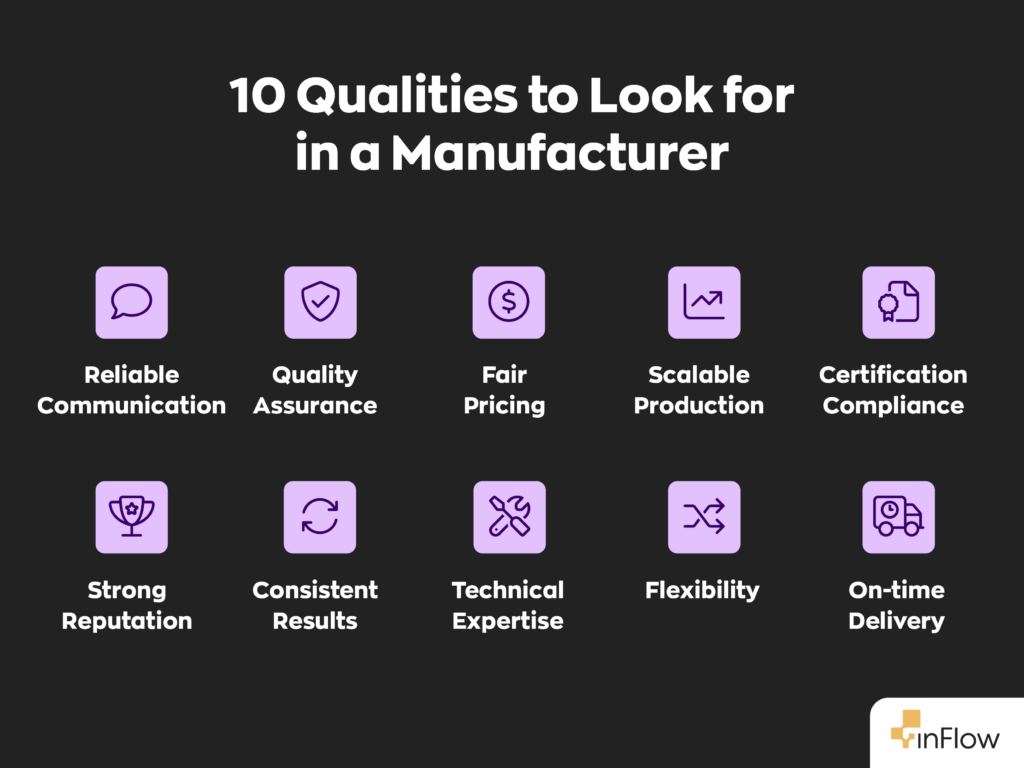
Once you’ve identified an appropriate product, it’s time to find and vet manufacturers. For this step, use platforms like Alibaba or ThomasNet, and attend trade shows.
Here are some things you can do when evaluating potential partners:
- Request and test samples thoroughly
- Verify certifications and compliance standards
- Check references from other clients
- Assess communication skills and responsiveness
Once you’ve settled on a manufacturer to partner with, you’ll need to negotiate terms. Most manufacturers require minimum order quantities (MOQs) from hundreds to thousands of units. Settle on terms that work for your cash flow, including unit pricing, payment terms, quality standards, and delivery timelines.
Where to sell private label products
When it comes to selling private label products, a multi-channel approach will give you the broadest reach. However, it’s always best to start with your own website to build your brand identity and create direct relationships with your customers. From there, expand to major marketplaces like Amazon, AliExpress, or Walmart Marketplace for their massive reach. You can even consider wholesaling your products to other retailers for added stability and growth.
The key is diversification. Never put all your eggs in one basket. Selling across multiple channels helps you reach different audiences, reduce risk, and create a more resilient business.
How inFlow can support your success
Managing private label products requires sophisticated inventory management, and that’s where inFlow comes in. Our inventory management software has a plethora of features that can help your business roll out your new private label products with ease, like:
- Real-time inventory tracking across multiple locations
- Automated reorder points
- Integration with ecommerce platforms and accounting software
- Professional invoicing
- Sales reporting and analytics
- Fully integrated barcode system
These capabilities become especially important when managing longer lead times and larger order quantities typical of private label products.
Conclusion
Private label products represent one of the most realistic paths to differentiating your brand and creating unique value for your customers. Yes, it requires planning, upfront investment, and quality management, but the rewards make it worth considering.
Start with thorough market research, find the right manufacturing partners, and focus on perfecting one or two products first, then expand based on customer feedback. You’ll have your own private label empire in no time.
FAQ
What are private label products?
Private label products are goods manufactured by a third party but sold exclusively under your brand. Unlike white label products, which are sold to multiple retailers, private label products are customized for your brand alone. You control the specs, packaging, and pricing, which means you’re building real brand equity instead of just reselling someone else’s product.
What is the difference between private label and white label products?
The key difference is exclusivity. White label products are generic goods sold to many retailers with minimal customization. Private label products are made specifically for your brand, giving you control over ingredients, features, and packaging. Private label requires higher minimum orders and more upfront investment, but delivers stronger margins, better brand differentiation, and greater customer loyalty over time.
What are the benefits of private label products for a business?
Private labeling offers higher profit margins (typically 40–60% vs 10–20% for reselling), complete control over branding and pricing, and customer loyalty that’s hard to replicate. Because your products are exclusive to your store, customers can only buy them from you, which reduces price-based competition and gives your business a real competitive edge.
What industries are most suitable for private labeling?
Private labeling works well in industries where product differentiation matters and manufacturing is accessible. Popular categories include beauty and personal care, food and beverage, supplements, pet products, cleaning supplies, and home goods. The best fit is any category where customers care about the brand experience, not just the product itself.
How does the private label process work from manufacturing to branding?
The process starts with market research to identify a high-demand product. You then find and vet a manufacturer (platforms like Alibaba or ThomasNet are good starting points), request samples, negotiate MOQs and payment terms, and finalize your packaging and branding. From first contact to finished product, expect a lead time of roughly 2–6 months before you’re ready to sell.
What is the role of supplier selection in private label success?
Your manufacturer is your most important partner. A reliable supplier delivers consistent quality, communicates clearly, meets deadlines, and scales with your growth. Always request samples, verify certifications, and check references before committing. Poor supplier selection is one of the most common reasons private label launches fail.
What platforms are best for selling private label products?
A multi-channel approach works best. Start with your own website to build brand identity and own the customer relationship directly. Then expand to major marketplaces like Amazon, Walmart Marketplace, or AliExpress for broader reach. You can also explore wholesaling to other retailers for added revenue stability. The key is diversification. Relying on a single channel puts your entire business at risk.
0 Comments