 Fellow Canadians: All inFlow plans are available in Canadian dollars





Key takeaways
- A GMP construction contract sets a maximum price for a project, with the contractor absorbing costs beyond that cap.
- GMP contracts are rarely just a single number. They usually include negotiated clauses such as contingencies, price escalation, allowances, shared savings, and Act of God protections.
- These contracts split responsibility for costs rather than covering everything under one cap. For example, some markups or project costs may still fall to the client.
- GMP contracts help with budgeting, transparency, and risk reduction for the client. They also encourage contractors to manage costs efficiently.
- GMP contracts also create disputes because not every unknown can be accurately predicted or priced. That makes them less suitable for very large or highly volatile projects.
- Alternatives like fixed-price and lump-sum contracts may work better depending on the project, and using past project data and software tools will help assess risk more carefully.
Construction projects are a complicated web of contractors, subcontractors, material costs, estimates, and quotes. It can be hard to wrap your head around, and it doesn’t help that these jobs are usually very expensive most of the time. Going slightly above margin might not be a massive deal in small product manufacturing, but when the product in question is worth millions, even a 5% difference can be thousands. This is why guaranteed maximum price, or GMP construction, is common practice.
So, what is GMP in construction? What is a GMP contract? How does it differ from a standard construction contract? Let’s find out!
What is GMP in construction?
GMP meaning in construction, is a contract stipulation that states a maximum payment for the relevant contract. After reaching that payment milestone, the contractor is responsible for any additional costs. Whether that’s labor, materials, or any other operating costs. Those in the construction industry also commonly refer to this as a construction manager at risk (CMAR) contract. This is because a GMP contract involves an inherent risk that most others don’t have.
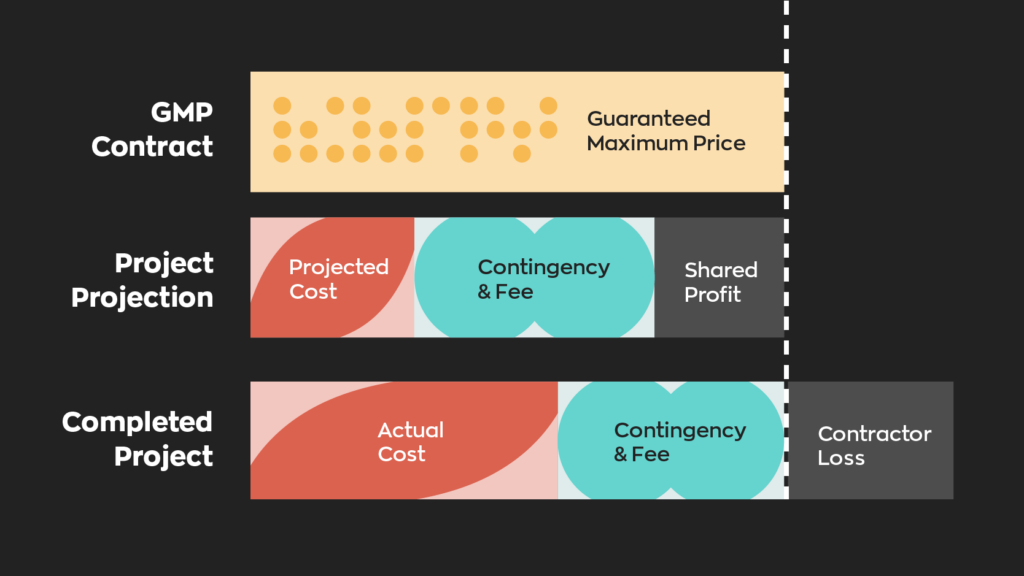
However, implementing GMP in construction isn’t as simple as naming a single figure. Because the industry moves so quickly, there’s quite a bit of nuance involved. And, of course, a GMP contract includes many clauses to address this.
It’s also important to note that a GMP contract is usually not all-encompassing. They typically stipulate that the client is responsible for certain project-based costs and the contractor for others. For example, the client may pay the contractor’s markup, while the contractor is responsible for subcontractor markups.
What goes into a GMP contract
While there are a few GMP contracts that name a max price and leave it at that, they’re exceedingly rare. The reason for this is simple: no good contractor will take on a risky job when there are too many unknowns.
For this reason, there are usually several negotiated clauses within a GMP construction contract. Here are the most common ones.
- Contingency – The contingency clause usually takes the form of an additional budget to cover unexpected costs. Contractors usually calculate this as a percentage of the overall GMP construction figure.
- Price escalation – We touched on this before, but the nature of the construction industry means that prices change rapidly. One day, you may pay $500 for materials; the next day, $750. That’s an extreme change, but it does happen. The price escalation clause accounts for these material price changes and potential changes in labor costs.
- Allowance/safety net – GMP contracts usually use the allowance clause to deal with unknowns. For example, if the client knows they want wooden floors but not what type of wood. Because the cost of materials can vary greatly, contractors shouldn’t be responsible for as-of-yet unknown costs.
- Shared savings – Of course, the overall goal of projects is to spend as little as possible while maintaining quality. A shared savings clause states that any budgeted funds left over after completion will be distributed between client and contractor. While this can push contractors to find cost-saving measures, they must maintain a certain level of quality. Be sure any cost-cutting methods are appropriate and safe.
- Act of God clause – Despite the name, the Act of God clause doesn’t involve any sort of religious requirements. Instead, it’s a way to say that sometimes things happen. Following the long-lasting effects of COVID-19, these clauses are starting to rise in popularity.
Advantages and disadvantages of GMP construction
Of course, there are advantages and disadvantages to GMP construction. This also means that GMP construction may not be ideal for every project. For example, even the smallest of errors can be extremely costly when building a large building such as a hotel. It’s more suitable for smaller-scale projects where accounting for unknown costs is easier.
Advantages of a GMP contract
- Easier budgeting – While GMP construction aims to account for unknowns, it also makes it easier to calculate the overall budget. Because of this, it’s easier for the client to have the budget ready and available more quickly.
- Transparency – GMP construction naturally leads to both parties seeing where funds are going at all times. As a result, it makes it more difficult for there to be any foul play on either side.
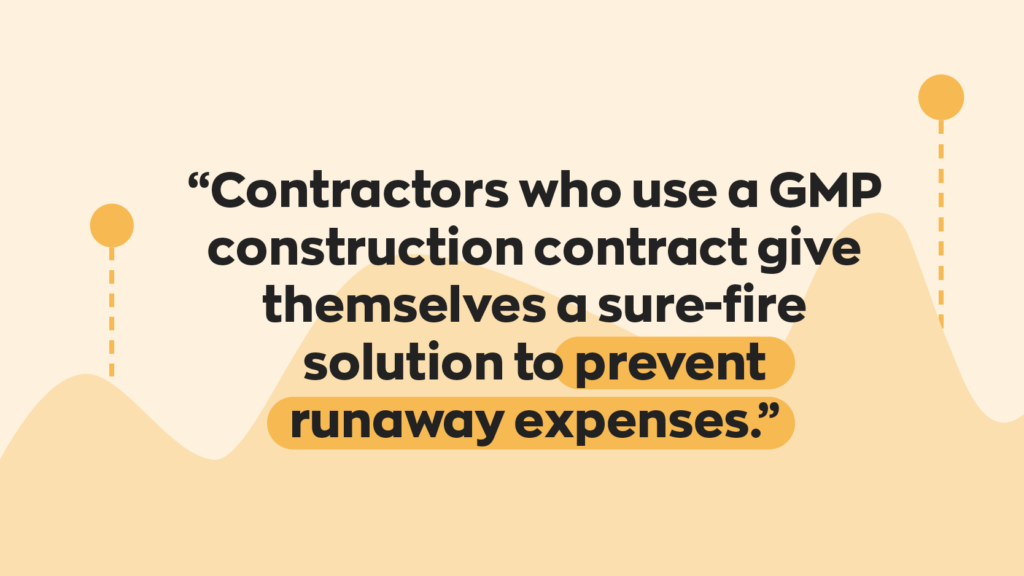
- Reduced risk for client – For the client, GMP construction also offloads much of the risk to the contractor. While this may sound downright evil, it also ensures that they’ll receive the end product they expect. In many cases, it also pushes the contractor to work as efficiently as possible.
Disadvantages of a GMP contract
- Can create friction – Unfortunately, as with many other legal contracts, GMP contracts can lead to disputes. While they’re made as straightforward as possible, it’s also difficult to correctly identify everything. As such, disputes about financial responsibility often arise.
- Impossible to accurately account for all unknowns – Unfortunately, at the end of the day, it’s impossible to account for everything. As a result, there are many instances where a GMP contract goes far above the initial price. This inherent unknown sometimes makes contractors uneasy about or unwilling to take GMP contracts.
- Not suitable for all projects – As we said before, GMP contracts aren’t ideal for every project. The sheer scope of some projects makes them impractical. This is also true for some fast-moving industries where materials are rare and experience frequent price fluctuations.
GMP construction alternatives
It’s important not to forget that there are alternatives to GMP in construction, such as cost-plus contracts. Some are also variations.
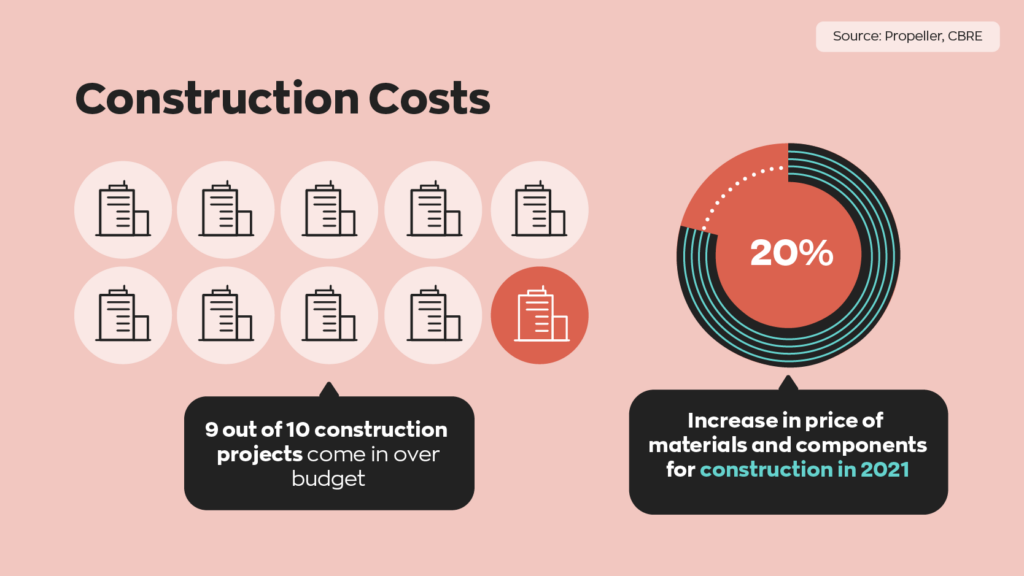
Fixed-price construction, for example, sets a budget for the construction part of the project. This helps set the budget while leaving room for unforeseen expenditures.
A lump-sum contract is also similar to GMP construction in that contractors are given a lump payment. Instead of calculating the budget, the contractor agrees to finish the project in exchange for an agreed-upon payment figure.
Use software to help manage risk carefully
GMP construction aims to reduce risk to the client, but not all risk is avoidable. Eliminating risk altogether may be important, but restrictive or unfair GMP contracts can put too much burden on the general contractor.
The best way to assess the amount of risk involved in these contracts is by looking at past projects as an indicator. This is why construction and field service workers use our software, inFlow, for all their field service management needs. We included robust reporting features inside inFlow to give businesses the insights they need to make informed decisions on future projects.
0 Comments