




Key takeaways
- Open API barcode inventory software allows businesses to customize and integrate with existing tools like ecommerce, shipping, ERP, and CRM platforms.
- API stands for application programming interface. An API allows two or more programs to communicate with one another and exchange data.
- Unlike closed APIs, open APIs are publicly available and give developers the flexibility to build custom features, automate workflows, and integrate with existing systems.
- Benefits of open API barcode software include lower costs compared to building from scratch, seamless integration across platforms, increased scalability through stateless architecture (like REST), and the ability to adapt over time.
- Best practices include assessing your needs, choosing reliable and secure software, hiring skilled developers, and starting with pilot projects before scaling.
- Open APIs offer a future-proof path for businesses that want to grow without being limited by rigid, one-size-fits-all software.
Finding the right barcode software can be frustrating for businesses with unique workflows. Solutions touted as “one-size-fits-all” often fall short when it comes to flexibility, especially when trying to integrate with other software solutions. That’s where open API barcode inventory software comes in.
While closed systems offer limited customization, open API software leaves the door open for developers to create something new that works well for their specific use case.
What is open API software?
Let’s start by reviewing what an API (application programming interface) is. Whether or not you have any programming experience, you’re probably aware that there are multiple programming languages. In fact, there are quite a few.
It’s not a one-to-one comparison, but we can apply the same logic to software. You can think of every piece of software being written in a different language. By extension, they can’t just communicate with one another at will. They need something to translate for them.
That’s where APIs come into play. In technical terms, an API is a shared instruction set that allows software to exchange data. In simple terms, it translates for software and allows different software to work together.
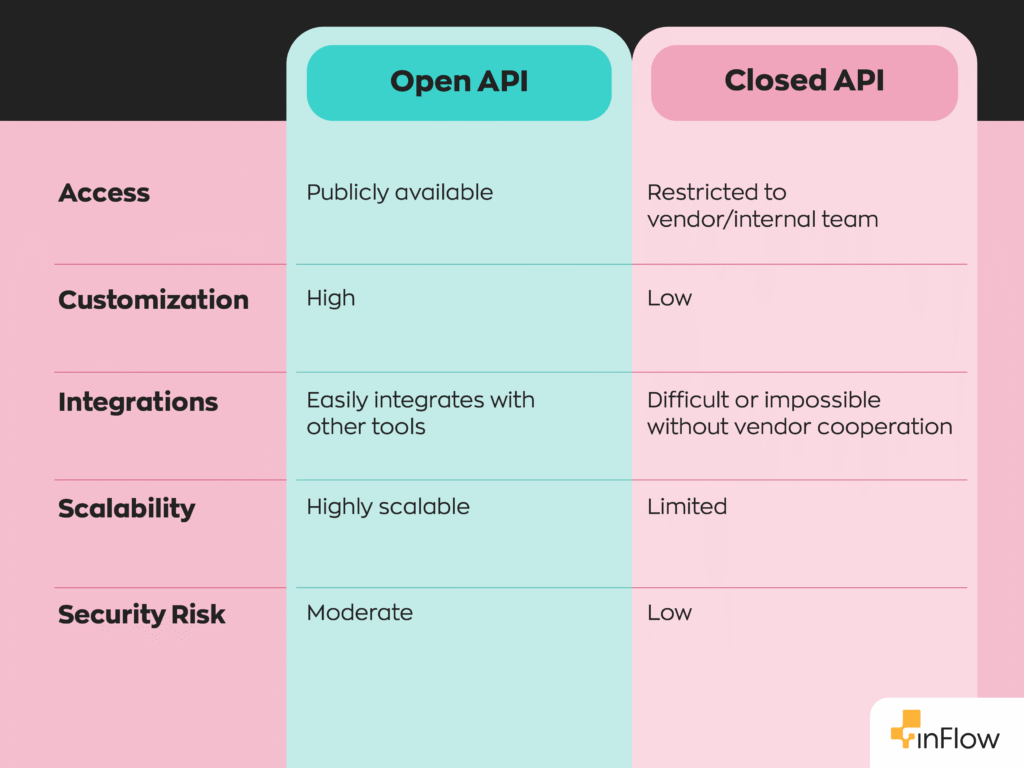
An open API, or public API, is an application programming interface openly available to software developers. This allows them to develop custom features or integrations.
On the other hand, closed API software is typically locked down. This means it’s only available to the vendor and their internal team, limiting customizations and integrations.
Benefits of barcoding software for inventory with open API
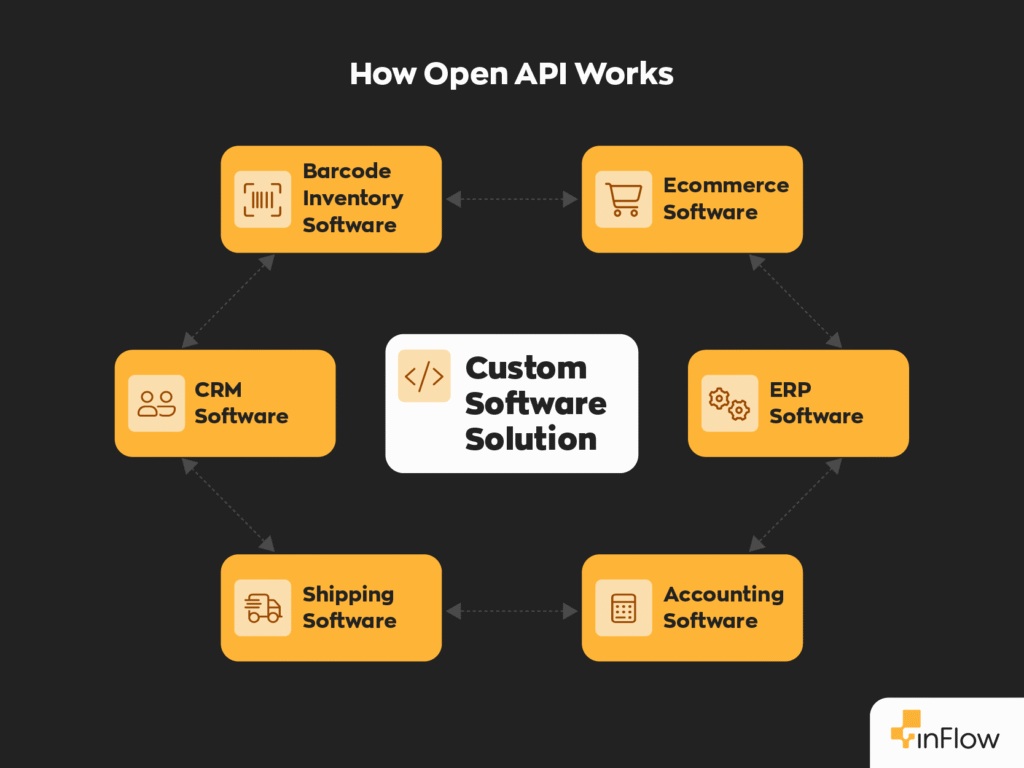
In the case of barcoding software, using an open API means you can connect all areas of your business. For example, open API barcode software lets you link your inventory system with ecommerce tools, shipping providers, ERPs, CRMs, and more.
Outside of general connectivity, open API barcode inventory software offers quite a few benefits. Most of them have to do with using an already existing application.
More cost-effective
Custom-building an entire barcode inventory system from scratch is expensive. But if you find one with an open API, you can create a flexible system that works with your existing tech stack at a fraction of the cost.
Seamless integration
Open API software is your best bet if you use other software solutions and want something that fits nicely with those. It will allow your barcoding software to talk to your other programs seamlessly. That means less double data entry and fewer errors overall.
Flexibility
Connections through open APIs also allow businesses of all sizes to add functionality whenever necessary. You wouldn’t be wrong to consider this the selling point of open APIs. The ability to add functionality where necessary makes them incredibly versatile.
Scalability
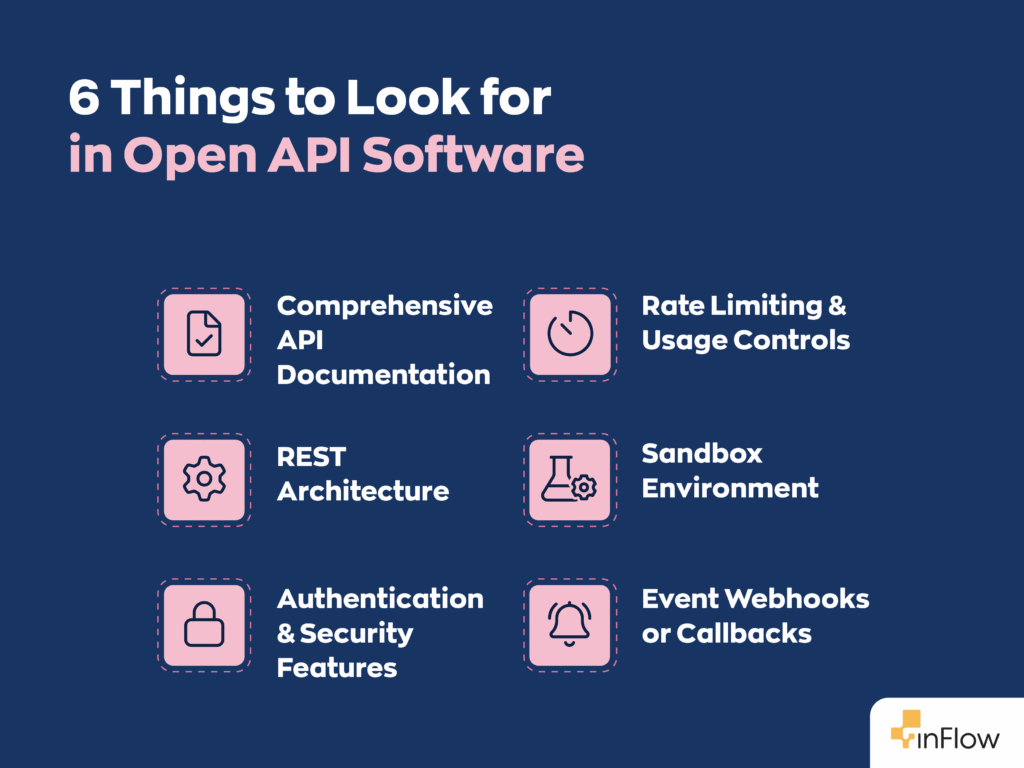
As your business grows, so will the number of tools you use. This is why many open APIs use REST architecture, which is stateless and therefore easy to scale. Statelessness means each API request is self-contained with no server-side session to share, which gives it a broader range of horizontal integrations. In short, open APIs (especially RESTful ones) enable systems to scale outwards by adding more servers, enabling more throughput without the need to redo the software.
Open API software is growing in popularity
Considering all these benefits, it should be no real surprise that open APIs are popular. After all, it doesn’t matter how useful a single application is if it can’t communicate with the other software you use.
While still a relatively new market, the open API economy was valued at 3.66 billion USD in 2023. And this is expected to reach 25 billion USD in 2032, indicating a compound annual growth rate (CAGR) of nearly 24%.
There’s also the matter of future-proofing to consider. It’s no real secret that technology has seen an increase in connectivity lately, such as Internet of Things (IoT) protocols.
Best practices when implementing
If you’re looking to implement open api barcode inventory software at your business, here are some things to keep in mind.
Assess individual business needs
What one business needs from its software will differ from what another needs. When working with an API, you decide what functionalities to add. Ensuring the functionalities suit your needs is fundamental to working with APIs.
Prioritize reliability
Building around an open API means you’ll want it to be as stable as possible. If it goes down or something goes wrong, processes that rely on it will grind to a halt. Choosing reliable barcode software with open API, like inFlow, is crucial for avoiding outages and other related downtime.
Lock down security
An open API is inherently more vulnerable than a closed system. That’s just the way it is, but that doesn’t mean open APIs are unsafe, either. For example, API gateways act as an entry point for customer requests. This is a relatively simple measure that makes things exponentially more secure. It’s also best to check on both local and federal legislation.
Use capable developers
If you’re building from the ground up, you’ll want to make sure your devs are capable. There’s no real easy way to do this, but the good news is that there’s plenty of freelancers out there. So even if you don’t have your own development branch, there’s a pool of readily available talent to pull from.
Test before scaling
Since working with APIs ties so many different systems together, more things can go wrong. To mitigate the risks to your business, it’s a good idea to start with a pilot project. For example, start with one function at a time and iron out the kinks before rolling it out further.
Final Thoughts
In the modern era, there is specific software for everything, and the ability to integrate and automate your operations is no longer a luxury—it’s a competitive advantage. Open API barcode inventory software gives businesses the flexibility, control, and scalability they need to grow without being boxed in, so to speak.




0 Comments