




Key takeaways
- EU sustainability compliance is no longer optional for SMEs because larger clients and supply chain partners will increasingly demand accurate sustainability data.
- New regulations, such as the CSRD, Green Deal, Packaging and Waste Directive, and Due Diligence Directive, are pushing SMEs toward better tracking of product origins, carbon footprints, packaging waste, and energy use.
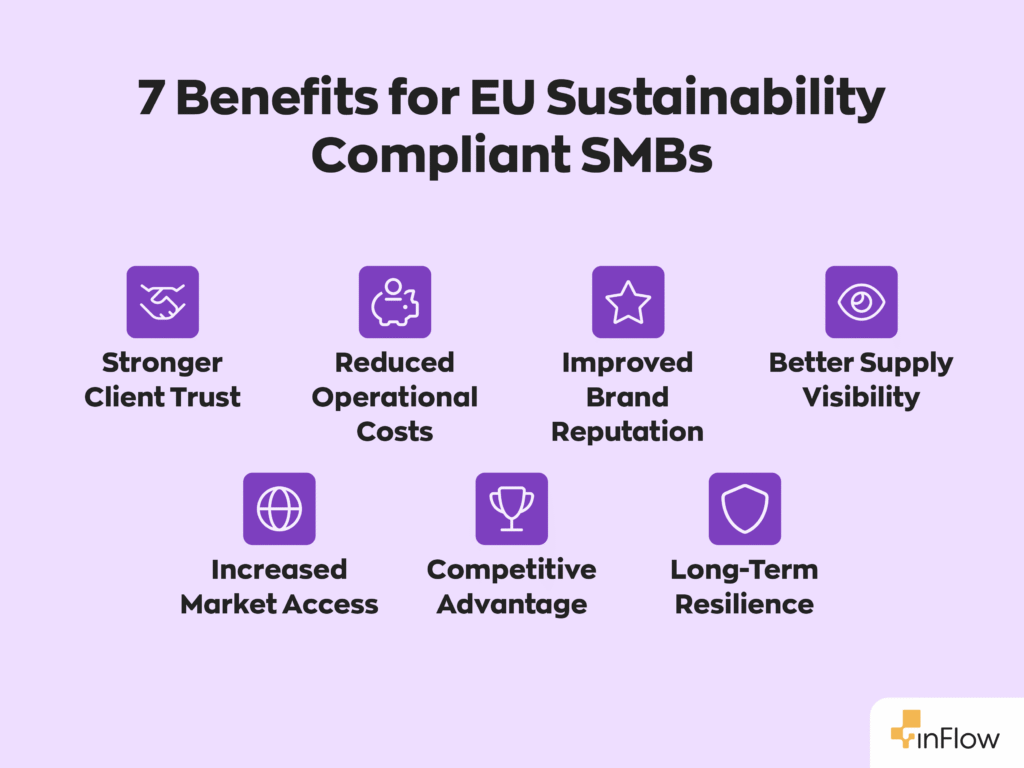
- Compliance doesn’t just prevent fines; it creates opportunities for SMEs to secure more contracts, appeal to eco-conscious customers, and reduce costs through waste reduction.
- Cloud-based tools like inFlow make compliance manageable by centralizing data, automating reporting, and reducing paperwork.
- Mapping supply chains, going digital, and staying updated on regulations can help SMEs turn compliance into a competitive advantage.
Sustainability is no longer optional for European SMEs. If you run a small or medium-sized business in Europe, you’ve probably noticed sustainability isn’t just a buzzword anymore. It’s becoming law. From packaging requirements to carbon reporting, the new EU sustainability rules don’t just affect big corporations but also the SMEs that form the backbone of Europe’s economy.
For many businesses, the challenge is figuring out what applies to you and how to stay compliant without breaking the bank.
What’s changing: the new wave of EU regulations
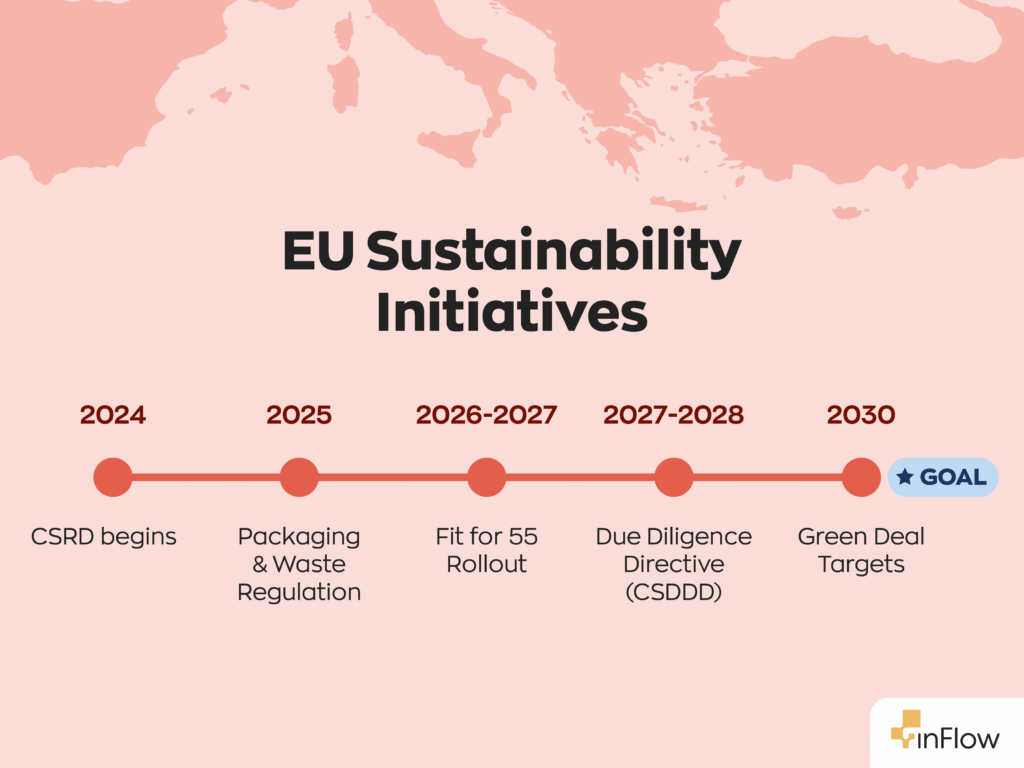
The EU is rolling out a series of initiatives designed to make supply chains more transparent and sustainable. A few key ones that SMEs should know about:
- Corporate Sustainability Reporting Directive (CSRD). Larger companies must now disclose detailed sustainability data, and SMEs supplying them will be expected to provide accurate information.
- EU Green Deal and Fit for 55. Measures to cut emissions are trickling down, with pressure on SMEs to adopt greener practices.
- Packaging and Waste Directive. Stricter rules on recyclability, reuse, and waste reduction are being enforced across EU markets.
- Due Diligence Directive. SMEs involved in cross-border supply chains may soon be required to demonstrate how they manage environmental and human rights risks.
These aren’t abstract policies either. They directly affect how SMEs in the EU buy, store, ship, and track their products.
The hidden impact the EU sustainability rules have on SMEs
Even if there isn’t a legal requirement to file sustainability reports, chances are your larger clients or trade partners will ask you for data. That means SMEs need to get better at tracking:
- Product origins and suppliers
- Carbon footprint of shipments
- Packaging types and waste levels
- Energy use in production and warehousing
Without reliable systems, this can quickly become a nightmare of spreadsheets, emails, and manual updates.
How digital tools make compliance manageable
This is where cloud-based inventory and supply chain tools can make a real difference. With inFlow, for example, SMEs can:
- Track product origins: Keep a record of where every item came from to answer supplier due diligence requests.
- Generate accurate reports quickly: Turn raw data into exportable sustainability insights.
- Optimize stock levels: Reduce waste by ordering only what you need, when you need it.
- Cut paperwork: Automate documentation for shipments, suppliers, and customers.
Adopting a system like inFlow is about replacing endless manual admin with a system that keeps your supply chain transparent and compliant, without draining your time.
Practical steps for SMEs worried about EU sustainability rules
If sustainability rules feel overwhelming, here are three small but powerful steps you can take today:
- Map your supply chain—Identify where your products are coming from and where the gaps in data might be.
- Go digital—Move away from spreadsheets to a cloud-based system that can actually track and centralise your data.
- Stay updated—EU rules evolve quickly. Make a point of reviewing new directives quarterly so they don’t catch you off guard.
Why inFlow is a smart fit for compliance-minded SMEs
inFlow was designed with SMEs in mind. Unlike enterprise systems that are heavy, complex, and expensive, inFlow is built to be:
- Simple: Easy to use for small teams.
- Affordable: Subscription pricing keeps compliance within budget.
- Adaptable: Works for wholesale, ecommerce, distribution, or light manufacturing.
- Transparent: Gives you real-time visibility into stock, orders, and suppliers.
It’s not about ticking boxes; it’s about making compliance a byproduct of running your business smarter.
Final word: EU sustainability compliance as an opportunity
EU sustainability rules may feel like another layer of red tape, but they also present opportunities. SMEs that get ahead of the curve can win more contracts with larger companies, appeal to eco-conscious customers, and cut costs by reducing waste.
With the right digital tools, compliance isn’t just about avoiding fines; it’s about unlocking growth. And with inFlow, SMEs can move towards sustainability with confidence, without the overhead.
FAQs
1. Do EU sustainability rules apply to all SMEs?
Not directly, but if you supply to larger companies, they will likely require sustainability data from you.
2. What is the CSRD, and how does it affect SMEs?
The Corporate Sustainability Reporting Directive applies to large companies, but SMEs will feel the impact because they’re part of those supply chains.
3. How can SMEs afford to comply with new regulations?
By digitizing processes with affordable, cloud-based tools, you can centralize data and automate reporting without needing a large IT budget.
4. Can inFlow help with sustainability tracking?
Yes. inFlow gives you a central place to track suppliers, product origins, and stock levels, making compliance reporting much easier.
5. Where should SMEs start with sustainability compliance?
Start by mapping your supply chain, digitising inventory processes, and keeping up to date with EU regulatory updates.
Stop wrestling with spreadsheets for sustainability reporting. Start your free trial of inFlow and generate accurate data in minutes.

0 Comments